Simple Cash Envelope Budgeting For Beginners
📖 Table of Contents
- What Is Simple Cash Envelope Budgeting For Beginners?
- How To Set Up Your Budget With Cash Envelopes
- The Benefits Of Using Cash Envelopes
- Common Mistakes When Starting With Cash Envelopes
- Tips For Making The Cash Envelope Method Work For You
- Make It Your Way
- Frequently Asked Questions
- The Printable Action Plan
When I first tried to get my finances under control, I felt like I was standing in a dark room with no idea where to start. I had bills piling up, and I wasn’t sure how to track my spending. That’s when I discovered simple cash envelope budgeting for beginners. It wasn’t flashy or complicated — just a set of envelopes and a plan to stop living paycheck to paycheck. Within a few weeks, I had a clearer idea of where my money was going and even started saving for the first time in years.[5]
Simple cash envelope budgeting for beginners is not about cutting out all the fun or living in austerity. It’s about taking control of your money in a way that feels manageable. I used to think budgeting was only for people who had no debt or lived in a cave. But the truth is, it’s a tool that can work for anyone — even if you’re juggling rent, groceries, and a few credit card payments. It’s the kind of approach that allows you to spend more freely while still keeping your finances in check.
What I love about this method is how tangible it is. You can see your money, touch it, and even feel the satisfaction of watching your envelopes deplete and replenish. I remember the first time I took my money out of my bank account and put it into physical envelopes. It felt like a small but powerful step toward financial independence. If you’re ready to take that step, this guide will walk you through every part of the process with real-life examples, step-by-step instructions. Even some mistakes I made along the way.
Why You'll Love This Simple Cash Envelope Budgeting Method
- It helps you see your money clearly, which makes it easier to control your spending.
- You can avoid impulse purchases and stay within your limits.
- It’s a great way to build savings without relying on apps or complex tools.
- It’s adaptable — you can tweak it to fit your lifestyle and goals.
What Is Simple Cash Envelope Budgeting For Beginners?
As of August 2026, at its core, simple cash envelope budgeting for beginners is a low-tech way to manage your money. Instead of relying on digital apps or spreadsheets, you use physical envelopes labeled with categories like groceries, transportation, and entertainment. Each envelope holds the cash you’ve decided you can spend on that category for a given period — usually a month.[1]
I tried this method after I realized that I was always overspending on dining out and shopping. By putting a set amount of cash into an envelope labeled 'entertainment,' I was forced to be more mindful of where my money was going. If the envelope was empty, I had to skip the movie or eat at home instead.
This method works especially well for people who feel overwhelmed by financial tools or who aren’t tech-savvy. It’s like having a personal budgeting assistant that’s always there, visible, and unchanging.
Use different colored envelopes or label them with markers to make your budget more visual and fun to track. I used red for bills and green for savings, and it helped me stay focused.
Part of our Cash envelope budgeting for beginners guide.
How To Set Up Your Budget With Cash Envelopes
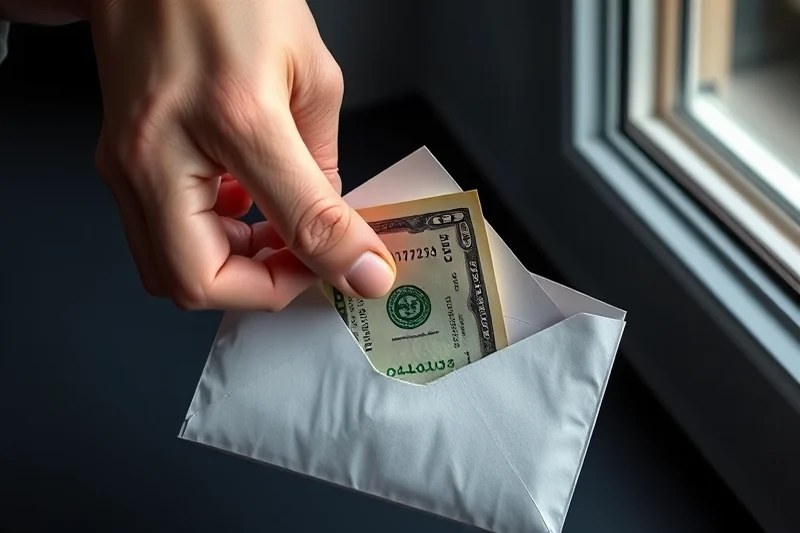
To start, you’ll need to track your expenses for a few weeks to get a sense of how much you typically spend on things like rent, groceries, and utilities. Once you have an idea of your average monthly costs, you can allocate cash into envelopes based on those numbers.
I used a notebook and a pen to write down every purchase I made for a month. That helped me see where my money was going and how much I needed in each envelope. I made sure to leave some room for unexpected expenses, like car repairs or medical bills.
Once you’ve set your envelopes, you’ll need to put the money in them and carry them around with you. I kept mine in a small tote bag that I carried to work, which made it easy to access the money when needed without relying on my credit card.
Cash is the most honest currency — you can’t spend more than what’s in the envelope.
Related: Cash envelope budgeting beginners checklist
Related: Simple Cash Envelope Budgeting Mistakes Pitfalls
Related: Cash Envelope Budgeting By Income Life Stage For Beginners
Related: Cheap Cash Envelope Budgeting For Beginners
Related: Cash envelope budgeting for beginners for beginners
Related: What Is Envelope Design
Related: Simple Cash Envelope Budgeting Mistakes
Related: Cash Envelope Budgeting Beginners Guide
The Benefits Of Using Cash Envelopes
One of the biggest benefits of using cash envelopes is that they prevent impulse buying. When you’re shopping with a credit card, it’s easy to buy things you don’t really need. But with cash, you can only spend what’s in the envelope.
I noticed a significant change in my spending habits after switching to this method. I used to spend $100 a month on coffee and snacks, but with a $30 envelope for food, I was forced to cut back and even started cooking at home more often.[2]
Another benefit is the sense of control you get from seeing your money in physical form. It’s a powerful reminder that every dollar you spend has a purpose and that you can’t spend more than what’s in the envelope.
While the cash envelope method is low-tech, using a budgeting app like YNAB or Mint can help you track your envelopes and even set up reminders. I used an app to track my envelope balances and it made the process easier and more organized.
“When I first tried to get my finances under control, I felt like I was standing in a dark room with no idea where to…”— EnvelopeCash editors
Common Mistakes When Starting With Cash Envelopes

One of the biggest mistakes I made early on was not setting realistic budget amounts. I thought I could spend $50 a month on groceries, but after a few weeks, I found myself running out of money. I had to adjust my estimates and be more careful about what I bought.[3]
Another mistake is not tracking your expenses accurately. If you don’t write down every purchase, you might end up overspending in some categories and underspending in others. I started using a notebook and a pen to track everything, and it made a huge difference.
Finally, it’s important to adjust your envelopes as your needs change. If you get a new job or have unexpected expenses, you might need to increase your budget in certain categories. I learned to be flexible and make changes when needed.
Tips For Making The Cash Envelope Method Work For You
Setting realistic goals is crucial for making the cash envelope method work. You need to know what you can afford and what you can’t. I started by listing all my monthly expenses and making sure I had enough money in each envelope to cover them.
Using a tracking system can help you stay on top of your budget. I used a notebook and a pen to track my expenses, and it made it easier to see where I was spending my money. I also set up a budgeting app to help me stay organized.
Finally, being flexible with your budget is important. Your needs might change over time, and you might need to adjust your envelopes accordingly. I learned to be open to change and make adjustments as needed.
⭐ Classic
The traditional cash envelope method with no extra tools or adjustments.
💰 Budget
A simplified version of the cash envelope method for people with limited resources.
⚡ Extra-Fast
A quicker setup for those who want to get started without spending too much time on preparation.
✨ Depth
A more detailed version of the cash envelope method that includes tracking and regular reviews.
🥗 Light
A minimal version of the cash envelope method that focuses on the essentials and avoids extra steps.
| The mistake | Why it happens | The fix |
|---|---|---|
| Not setting realistic budget amounts | If you set unrealistic budget amounts, you might end up overspending or not having enough money in certain categories. | Track your expenses for a few weeks to get a sense of how much you typically spend on each category. Then, adjust your budget amounts accordingly. |
| Not tracking expenses accurately | If you don’t track your expenses accurately, you might end up overspending in some categories and underspending in others. | Use a notebook, app, or spreadsheet to track your expenses and make sure you’re staying within your budget. |
| Not being flexible with your budget | If you’re not flexible with your budget, you might struggle to make changes when your needs change. | Be open to adjusting your budget as needed. If you get a new job or have unexpected expenses, you might need to increase your budget in certain categories. |
| Not using a tracking system | If you don’t use a tracking system, you might lose track of your money and end up overspending. | Use a budgeting app or a notebook to track your expenses and make sure you’re staying within your budget. |
What You'll Need tap to check off
- 1 lb paper
- ½ cup glue
- markers to label envelopes
Method tap a step when done
- Gather all the materials you’ll need for your cash envelope kit. You’ll need paper, glue, and markers to label the envelopes.
- Cut the paper into envelopes of different sizes. You can use a template or just freehand it.
- Use glue to seal the envelopes. Make sure they’re strong enough to hold your cash.
- Label each envelope with a different category, like groceries, transportation, and entertainment.
- Place the appropriate amount of cash into each envelope based on your estimated monthly expenses.
- Store your envelopes in a safe, accessible place, like a drawer or a tote bag.
Key Facts
Simple Cash Envelope Budgeting For Beginners
Common Questions
What if I run out of money in one of my envelopes?
Can I use this method if I’m not good with money?
How do I know how much money to put in each envelope?
What if I need more money in an envelope?
Cite this guide
EnvelopeCash (2026). Simple Cash Envelope Budgeting For Beginners. https://envelopecash.com/simple-cash-envelope-budgeting-for-beginners/[4]
Feel free to cite or share this guide.
References
- Expert Insights on Budgeting - UCR School of Business - UC Riverside (business.ucr.edu)
- Budgeting Tips for Beginners – The Bookshelf - Cornell blogs (blogs.cornell.edu)
- Budgeting Made Simple: Free Tools to Help You Manage Your Money (blogs.ifas.ufl.edu)
- budget - Bourne, MA (bourne-ma.gov)
- Budgeting Basics Cash Flow Analysis Building Your ... - Bucks County (buckscounty.gov)