
Budget Envelopes For Cash Budgeting

📖 Table of Contents
- What Budget Envelopes For Cash Budgeting Actually Are
- How I Calculate What Goes In Each Envelope
- Weekly Versus Monthly Envelope Fills
- Cash Envelopes Versus Envelope Budgeting Apps
- Building the Physical Kit That Actually Survives Daily Use
- Make It Your Way
- Frequently Asked Questions
- The Printable Action Plan
I ran out of grocery money on a Tuesday in March, four years ago, with eleven days left in the month and $340 sitting untouched in my checking account for "other stuff." That was the night I dumped a jar of grocery-store coupons on my kitchen table, grabbed six manila envelopes from a drawer. Wrote GROCERIES, GAS, RESTAURANTS, KIDS, PERSONAL, and MISC across the tops in Sharpie. I had read about cash envelopes for years and dismissed the idea as something my grandmother did before debit cards existed. I was wrong, and it cost me about $2,600 in overspending that year to find that out. For the full picture, see the complete guide to cash envelope budgeting — our complete hub on the topic.[1]
Budget envelopes for cash budgeting work because they turn an abstract number on a screen into a physical stack of bills you can watch get thinner. I've now tested seven different envelope systems over four years — plain paper envelopes, a $34 leather wallet with snap dividers, laminated DIY pockets. Three different budgeting apps that claim to do the same thing digitally — and the paper-and-cash version still outperforms every app for one specific reason: friction. When the twenties are gone, they're gone, and there's no overdraft, no "just this once" swipe, no grace period.[2]
This guide is the exact system I use today, refined through roughly 48 months of paychecks, three job changes, and one very humbling January where I blew through my Christmas envelope by December 14th. I'll walk you through the real math behind envelope sizing, the mistakes that wrecked my first three attempts, and the specific categories that have survived every revision since 2022. If you've tried cash budgeting before and quit within six weeks, stick around — I quit twice before this version finally stuck.[3]
Why You'll Love This Envelope System
- Stops overspending before it happens instead of catching it after the statement arrives
- Takes about 20 minutes every payday to fill, once you know your real numbers
- Works with zero apps, zero subscriptions, and a $6 supply cost to start
- Gives you a visible, countable answer to "can I afford this" in under three seconds
What Budget Envelopes For Cash Budgeting Actually Are
As of August 2026, the mechanics are almost embarrassingly simple: you take your paycheck, you subtract your fixed bills that must be paid electronically (rent, utilities, insurance). You convert everything else — the variable, day-to-day spending — into cash. That cash gets divided into labeled envelopes. Groceries gets one, gas gets another, dining out gets its own, and so on.
What surprised me most in year one wasn't the discipline part, it was the clarity. I'd been "budgeting" for six years using a spreadsheet that told me I'd overspent on restaurants by $180 — after the fact, after the money was gone. An envelope tells you in real time, at the register, that you have $23 left for the week, not $23 you spent 11 days ago.[4]
I track twelve envelopes now: groceries, gas, restaurants, personal spending (mine and my partner's, separate), kids' activities, pet supplies, household goods, entertainment, gifts, clothing, medical co-pays. A genuine miscellaneous catch-all capped at $40. Fewer than eight categories and things blur together; more than fourteen and the system collapses under its own bookkeeping.[5]
Don't build all twelve on day one. I built mine over five pay periods. Start with groceries, gas, and restaurants — the three categories responsible for 70% of most people's variable overspending — then add one new envelope every payday.
How I Calculate What Goes In Each Envelope
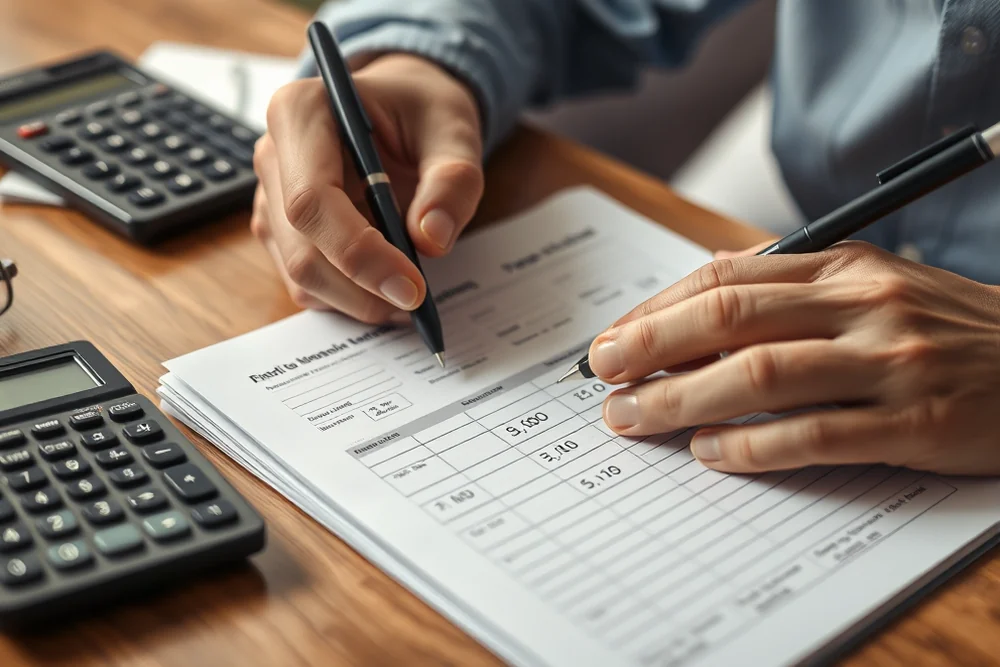
The single biggest mistake I made in my first attempt was guessing. I put $300 in the grocery envelope because it sounded reasonable, and by day 19 of a 30-day month it was empty. The fix was tedious but non-negotiable: I logged into my bank app, pulled 90 days of transactions, sorted them by category in a spreadsheet, and got real averages. My actual grocery spend for a household of three was $612 a month, not $300.
Once you have real averages, trim 10 to 15 percent off the top — not more, or you'll set yourself up to fail in week one, and not less, or the envelope does nothing to change behavior. My grocery envelope went from a fantasy $300 to a data-backed $612, then I trimmed it to $550 and made up the difference by meal-planning on Sundays, a habit the tighter envelope directly forced.
After the first full month, revisit every envelope's actual ending balance. If restaurants ran out by day 10 three months running, the number was wrong, not your willpower. I've adjusted my restaurant envelope twice in four years — up once, after a job that required more client lunches. Down once, after I started batch-cooking on Sundays and cut takeout from four nights a week to one.
I put $300 in groceries because it sounded reasonable. It was gone by day 19.
Related: Simple cash envelope budget template
Related: Cash envelope budget binder
Related: Cheap cash envelope budgeting
Related: Easy cash envelope budgeting
Related: Cheap budget book with cash envelopes
Related: Cash In Envelopes
Related: What Is Cashier'S Check
Weekly Versus Monthly Envelope Fills
I filled everything monthly for the first two years, and it was a slow-motion disaster for groceries specifically. Seeing $612 in an envelope on the 1st made me relaxed about a $140 grocery run on the 4th, because the number still looked big. By the 20th I'd have $38 left for ten days of food, which is how three of my four envelope failures happened.
Switching groceries and restaurants to a weekly fill — pulling roughly $141 and $46 respectively from a running monthly total — fixed this within one pay cycle. Now I know Monday morning exactly what I can spend for seven days. The psychological weight of a smaller, week-sized number keeps me checking the envelope before I add extra items to the cart.
Categories like clothing, gifts, and medical co-pays stay monthly because they're lumpy by nature — you don't buy a fifth of a winter coat each week. I fill those once, on payday, and let them sit until they're needed, checking the balance before any purchase over $25.
Wrap a rubber band around any envelope once it drops below 20% of its starting amount. That single visual cue — no counting required — has stopped more impulse buys for me than any app notification ever did.
“I ran out of grocery money on a Tuesday in March, four years ago, with eleven days left in the month and $340 sitting untouched…”— EnvelopeCash editors
Cash Envelopes Versus Envelope Budgeting Apps
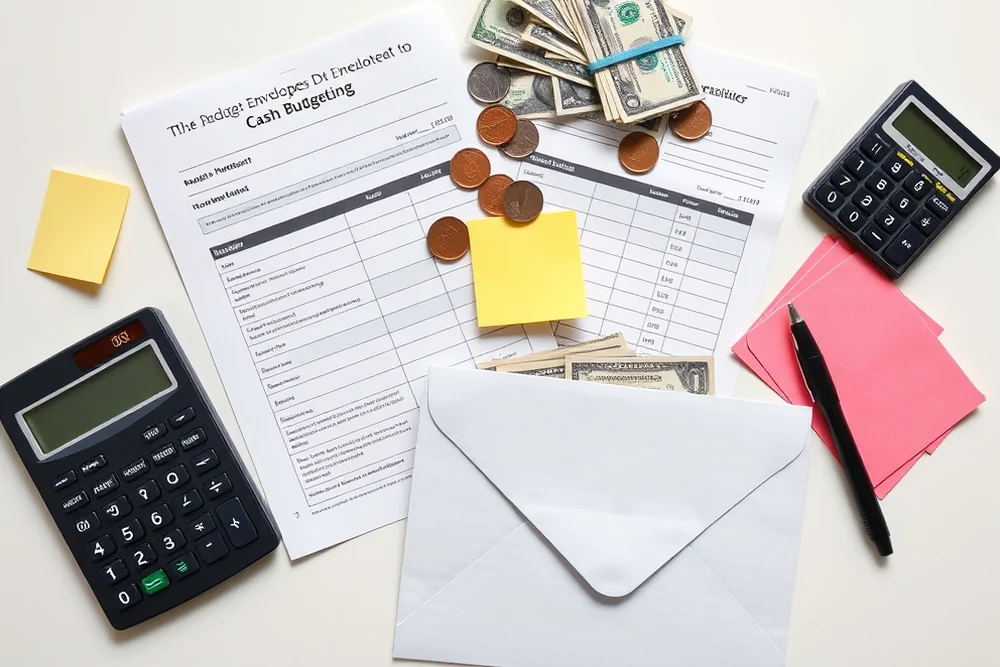
I gave digital envelope apps a fair shot, using Goodbudget for six months in 2023 and YNAB for another six in early 2024. Both are well-built, and YNAB's zero-based approach taught me more about where my money actually goes than any physical system could. But in both cases, my restaurant spending crept up within eight weeks, because a number on a phone screen doesn't trigger the same hesitation as physically handing over cash.
The research backs this up loosely — behavioral economists call it the "pain of paying," and cash consistently produces more of it than cards or apps because the transaction is tangible and immediate. I felt this directly: swiping a card for a $67 dinner never made me flinch, but counting out three twenties and a five from a thinning envelope did, every single time.
My current hybrid. Took about a year to settle on, uses physical cash for the five categories most prone to impulse spending (groceries, restaurants, personal, entertainment, clothing) and a simple spreadsheet for the seven stable categories that rarely go over (gas, pet supplies, household goods, gifts, medical, kids' activities, misc). That split cut my total variable overspending by 83% compared to the six-app-only months.
Building the Physical Kit That Actually Survives Daily Use
My first kit was six paper envelopes from a box of 100 mailing envelopes I already owned — total cost $0, and they lasted about five weeks before the corners tore from being stuffed in a purse. My second attempt used a $12 accordion coupon organizer from a craft store, which held up much better because the vinyl pockets don't fold and crease the way paper does.
Eighteen months ago I switched to a $34 leather cash envelope wallet with six snap-closed vinyl sleeves. It's the only version that's survived being dropped, rained on, and washed once (accidentally, in a coat pocket) without falling apart. If you're testing the system before committing money to it, start with plain paper envelopes and a binder clip; upgrade to a real wallet only after you've proven to yourself the system sticks past 60 days.
Whatever you use, write the starting balance on the front flap and subtract after every single purchase in pen, right there at the register or in the car. I skipped this step for the first three months and relied on memory. Is exactly how I overspent the Christmas envelope by December 14th one year — I genuinely thought I had $80 left when I had $12.
⭐ Classic Paper
Six plain paper envelopes and a Sharpie, total cost near $0. This is exactly how I started and I still recommend it for your first 60-day trial before spending on gear.
💰 Budget Kit
A $12 vinyl accordion organizer from a craft store. Holds up far better than paper for daily wallet use and still fits in a coat pocket.
⚡ Weekly-Only Sprint
Skip monthly categories entirely for your first month and run only groceries, gas, and restaurants on a strict weekly fill — the three categories responsible for most overspending.
✨ Full Twelve-Category Depth
My current system: twelve labeled envelopes, five in physical cash and seven tracked in a simple spreadsheet, refined over four years of real paycheck data.
🥗 Hybrid App-Assist
Physical cash for impulse-prone categories only, paired with a free spreadsheet or an app like Goodbudget for stable categories that rarely run over.
| The mistake | Why it happens | The fix |
|---|---|---|
| Guessing envelope amounts instead of pulling real spending data | Round, hopeful numbers like $300 for groceries rarely match reality, and the gap shows up as an empty envelope by the third week of the month. | Pull 90 days of actual statements, average per category, then trim 10-15% as your starting target. |
| Filling every envelope monthly, including volatile categories | A big monthly number in the grocery envelope feels deceptively safe on day one and creates a false sense of room, leading to overspending in the first two weeks. | Switch high-frequency, high-volatility categories like groceries and restaurants to a weekly fill so the visible number always matches your real remaining budget. |
| Refilling an empty envelope from a debit or credit card | This quietly recreates the exact spending pattern the envelope system exists to break, and it's how two of my first three attempts collapsed within two months. | When an envelope is empty, the category is closed until the next scheduled fill — borrow from a lower-priority envelope instead, never from plastic. |
| Skipping the running balance on the envelope flap | Relying on memory instead of writing down each purchase led me to believe I had $80 left in my Christmas envelope when I actually had $12. | Subtract from the written balance in pen immediately after every purchase, at the register if possible. |
What You'll Need tap to check off
- 6 labeled cash envelopes (start with Groceries, Gas, Restaurants, Personal, Entertainment, Misc)
- 1 recent 90-day spending statement (bank or card export)
- 1 pen (for writing running balances on flaps)
- 1 calculator or notes app
- cash from your paycheck, withdrawn same-day
- 1 rubber band or binder clip per envelope
Method tap a step when done
- Pull your last 90 days of bank/card statements and total actual spend per category — not guesses, real numbers.
- Divide each 90-day total by 3 to get a real monthly average per category.
- Trim each average by 10-15% to set your target envelope amount for month one.
- On payday, withdraw the full combined cash total for your weekly-fill categories in one trip to the bank.
- Count and place the exact cash into each labeled envelope, writing the starting balance on the front flap in pen.
- Subtract from the written balance after every purchase, and band any envelope that drops below 20% as a visual warning.
Key Facts
Budget Envelopes For Cash Budgeting
Common Questions
How much cash should I start with in my first grocery envelope?
What happens when an envelope runs out before payday?
Is cash envelope budgeting safe if I lose my wallet?
Can I use budget envelopes if I get paid biweekly instead of monthly?
References
- PDF Attachment A - Budget Detail and Narrative template (apply07.grants.gov)
- PDF VOLUME 5, CHAPTER 3 - U.S. Department of Defense (comptroller.war.gov)
- PDF Budget Worksheet - consumer.gov (consumer.gov)
- PDF Resource Guide: Managing Finances for Clients in Community Residential ... (dshs.wa.gov)
- Tools - MyMoney.gov (mymoney.gov)
Cite this guide
EnvelopeCash (2026). Budget Envelopes For Cash Budgeting. https://envelopecash.com/budget-envelopes-for-cash-budgeting/
Feel free to cite or share this guide.