
Budget Cash Envelope Budgeting Examples
📖 Table of Contents
I remember the first time I tried cash envelope budgeting — it felt like a lifeline during a particularly chaotic month when I was juggling rent, a car payment, and unexpected medical bills. I had never managed my money effectively before, and after years of living paycheck to paycheck, I needed a system that could force me to be intentional with every dollar. That’s when I stumbled upon cash envelope budgeting, and it changed everything.
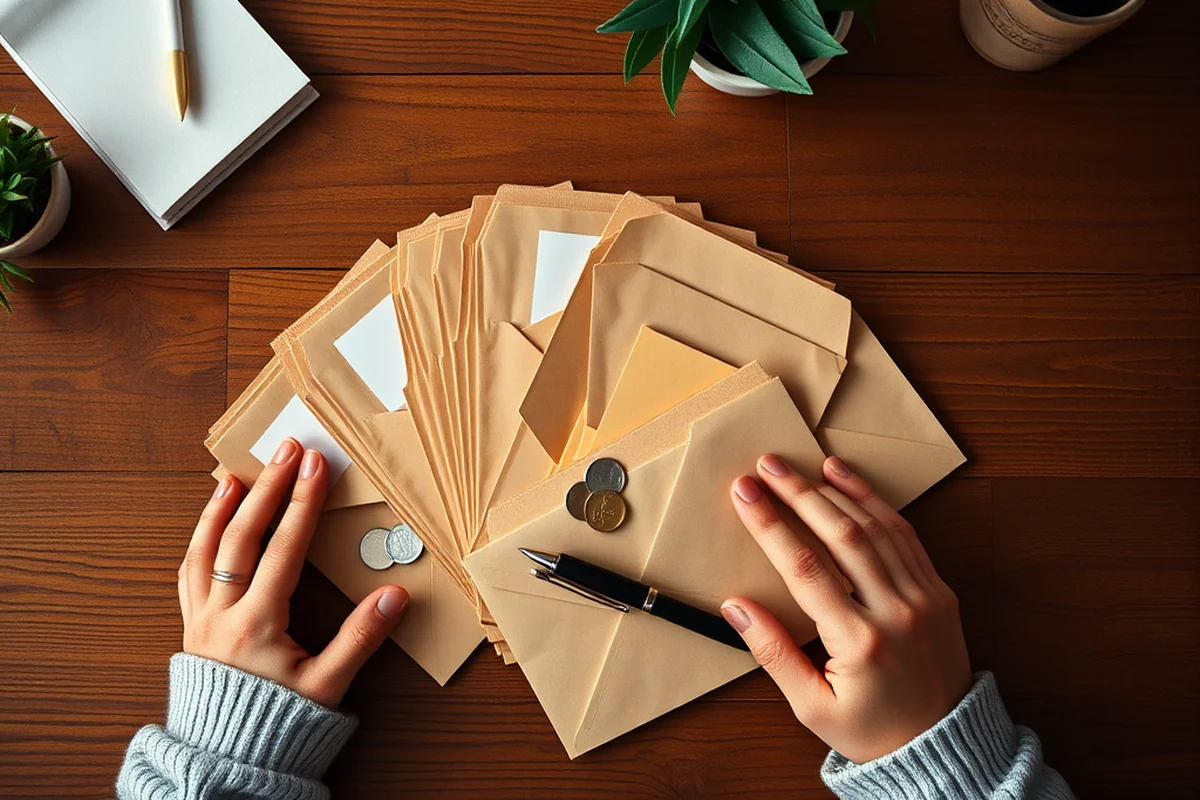
The idea of cash envelope budgeting is deceptively simple: you take your monthly budget, break it down into categories (like groceries, gas, entertainment), and allocate physical cash into labeled envelopes for each. This approach removes the temptation to overspend because once the cash is gone, the money is gone. I tested this method with my own finances, and within two months, I had a clear grasp of where my money was going and where I could cut back.
Since that initial success, I’ve refined and expanded on the cash envelope method, using it for everything from monthly bills to travel budgets and even emergency savings. It’s not a magic bullet, but it’s a powerful tool that works when you’re honest with yourself about your spending habits. I’m writing this article to share the real-life examples, techniques, and insights I’ve picked up along the way.
Why You'll Love This Budgeting Method
- It helps you spend only what you’ve allocated, not what you’ve earned.
- It forces you to confront your spending habits in a tangible, immediate way.
- It’s adaptable for any income level and can be used for short-term or long-term goals.
- It gives you a clear, visual overview of your finances without needing complex apps or spreadsheets.
How to Start with Cash Envelope Budgeting
As of August 2026, to start, I recommend sitting down with your monthly income and expenses. I created a simple spreadsheet where I listed all my recurring bills, like rent, utilities. Car payments, and then I estimated how much I spent on discretionary items, like dining out, shopping, and entertainment. This helped me see where my money was going and how much I could realistically allocate into each envelope.[1]
Once I had my categories, I printed out envelopes and labeled them with the specific amounts I wanted to allocate for each category. For example, I set aside $200 for groceries, $150 for gas, and $50 for entertainment. I made sure the total of all my envelopes didn’t exceed my monthly income. This step was crucial because it forced me to prioritize my spending and avoid overspending on non-essentials.[2]
The next step was to physically fill the envelopes with the exact amounts I had budgeted for each category. I found that using cash made the system more tangible and effective. Once the envelopes were filled, I stored them in a drawer or a small container and only took the envelope I needed for the specific expense. This method helped me avoid the temptation to spend more than I had allocated and kept me on track with my budget.
Before filling your envelopes, create a detailed list of all your monthly expenses. Be as specific as possible with your categories to avoid overspending. For instance, instead of just having an 'entertainment' envelope, break it down into 'movies,' 'dining out,' and 'hobbies.' This will help you track your spending more effectively.
Part of our Cash envelope budgeting real examples case studies guide.[3]
Real-Life Example: A Month on Cash Envelope Budgeting

One of the most effective ways to understand how cash envelope budgeting works is by looking at a real-life example. During one of my first months using this method, I budgeted $2,000 for all my expenses, including rent, groceries, transportation, and entertainment. I created 10 different envelopes, each labeled with a specific category and amount. I made sure the total of all my envelopes didn’t exceed my income, and I only took the cash I needed for each expense from its respective envelope.[4]
For instance, I had a $200 envelope for groceries. When I went to the store, I only took that amount and didn’t use any other cash for other expenses. This helped me stay within my budget and avoid overspending. I also made a habit of recording every transaction in a notebook, which helped me track my spending and see where I was doing well and where I needed to adjust.[5]
By the end of the month, I had successfully managed all my expenses without going over my budget. I even had some leftover cash in a few envelopes, which I used to save for an emergency fund. This experience taught me the power of cash envelope budgeting and how it can help you take control of your finances in a tangible and effective way.
Cash envelope budgeting doesn’t just help you save — it helps you see your money in a whole new light.
Related: Simple cash envelope budgeting examples
Related: Cash envelope budgeting real examples case studies on a budget
Related: Cash envelope budgeting real on a budget
Related: Cash envelope budgeting real step by step
Related: Cash envelope budgeting real mistakes to avoid
Related: Cash Envelope Budgeting Beginners On A Budget
Related: Best Cash Envelope Budgeting Examples
Why Cash Envelope Budgeting Works So Well
One of the key reasons why cash envelope budgeting works so well is because it takes the psychology of spending out of the equation. When you use credit cards or digital payments, it’s easy to overspend because you’re not physically seeing the money being spent. But with cash envelope budgeting, you can feel the weight of the cash in your hands, which makes it harder to spend more than you have allocated.
Another reason why this method is so effective is that it helps you become more mindful of your spending habits. Because you have to use physical cash for each category, you’re forced to think about each purchase and whether it’s necessary. This level of awareness can help you make better financial decisions and avoid impulse buying.
In my experience, cash envelope budgeting has been one of the most effective ways to take control of my finances. It’s not a perfect solution, but it’s a powerful tool that can help you stay on track with your budget and achieve your financial goals.
To maximize the effectiveness of cash envelope budgeting, use cash for discretionary expenses and keep credit cards for essential bills like rent, utilities, and car payments. This way, you can still enjoy the flexibility of using credit for important expenses while using cash for non-essentials.
“I remember the first time I tried cash envelope budgeting — it felt like a lifeline during a particularly chaotic month when I was juggling…”— EnvelopeCash editors
Common Mistakes People Make with Cash Envelope Budgeting

One of the most common mistakes people make is not being specific enough with their envelopes. For instance, instead of creating separate envelopes for groceries, transportation, and entertainment, some people just create a single 'miscellaneous' envelope, which can lead to overspending and a lack of clarity. To avoid this, I recommend being as specific as possible with your envelopes and labeling each one clearly.
Another mistake people make is not adjusting their envelopes as their income or expenses change. If you have a month where you earn more or your expenses increase, you need to update your envelopes accordingly. Failing to do this can lead to overspending or not having enough money for essential expenses.
Lastly, some people try to use cash envelope budgeting for all their expenses, including credit card payments and subscriptions. This can be overwhelming and make it difficult to track your spending effectively. I recommend using this method primarily for discretionary expenses and keeping credit cards for essential bills.
Tips for Making Cash Envelope Budgeting Work for You
One of the most important tips for making cash envelope budgeting work is to be consistent with your envelopes. Once you’ve set your budget, it’s important to stick to it as closely as possible. This means only taking the cash from the envelope you need for each expense and not using any other money for that purpose.
Another tip is to keep track of your spending in a notebook or a simple spreadsheet. This helps you see where your money is going and where you might need to adjust your budget. I found that recording my expenses helped me become more aware of my spending habits and make better financial decisions.
Lastly, it’s important to be flexible with your budget. If you find that your expenses are increasing or your income is decreasing, don’t be afraid to adjust your envelopes. The key is to stay on track with your financial goals while being realistic about your current situation.
⭐ Classic
The original cash envelope budgeting method with no modifications.
💰 Budget
A more affordable version of the cash envelope budgeting method that focuses on essential categories.
⚡ Extra-Fast
A quicker version of the method that uses pre-filled envelopes for common categories.
✨ Depth
A more detailed version of the method that includes subcategories and tracking tools.
🥗 Light
A simplified version of the method that focuses on the most essential categories for a minimalist budget.
| The mistake | Why it happens | The fix |
|---|---|---|
| Not being specific enough with your envelopes. | This can lead to confusion and overspending because you’re not clearly tracking where your money is going. | Create separate envelopes for each category and label them clearly. |
| Not adjusting your envelopes as your income or expenses change. | This can lead to overspending or not having enough money for essential expenses. | Update your envelopes regularly based on your income and expenses to stay on track. |
| Trying to use cash envelope budgeting for all expenses. | This can be overwhelming and make it difficult to track your spending effectively. | Use cash envelope budgeting primarily for discretionary expenses and keep credit cards for essential bills. |
| Not tracking your expenses. | This can lead to confusion and a lack of awareness about where your money is going. | Keep a notebook or spreadsheet to record your expenses and track your spending in real time. |
Budget Cash Envelope Budgeting Examples
Common Questions
What if I can’t afford to use physical cash for all my expenses?
Can I use a digital version of cash envelope budgeting?
How do I handle unexpected expenses with cash envelope budgeting?
Is cash envelope budgeting suitable for people with irregular incomes?
Cite this guide
EnvelopeCash (2026). Budget Cash Envelope Budgeting Examples. https://envelopecash.com/budget-cash-envelope-budgeting-examples/
Feel free to cite or share this guide.
References
- Budgeting | Admissions & Aid (admissions.uni.edu)
- Foundations for Strong Families 201 - HHS ASPE (aspe.hhs.gov)
- Budgeting Made Simple: Free Tools to Help You Manage Your Money (blogs.ifas.ufl.edu)
- Budgeting for a Week: A Realistic Approach | Uillinois (blogs.uofi.uillinois.edu)
- Budgeting Basics Cash Flow Analysis Building Your ... - Bucks County (buckscounty.gov)