
What Is Cashier'S Check Vs Money Order
📖 Table of Contents
I still remember the day I tried to pay a large bill with a money order and got turned down because the recipient needed a more secure form of payment. I had never heard of a cashier’s check before, and that moment forced me to understand the difference between a cashier’s check and a money order. This was a turning point for me in the world of personal finance, and it led me to explore the specifics of what each of these payment methods entails.[1]
When I first stumbled upon the idea of a cashier’s check, I didn’t quite grasp why it was considered more trustworthy than a money order. I had used money orders for years, and they seemed straightforward—just a way to send money without needing a bank account. But the cashier’s check, which I later learned was backed by a bank, felt more official and secure. That distinction became clear to me after I tried to use a money order for a major transaction and was met with hesitation.
The difference between a cashier’s check and a money order is more than just a matter of personal preference—it’s about trust, security. The kind of situations where each is best used. I had to learn the nitty-gritty details of how each works, their pros and cons, and when to use which. This journey taught me a lot about financial tools I had previously taken for granted.
Why You'll Love This Guide to Cashier’s Check vs Money Order
- Understand the key differences in security and reliability.
- Learn which method is best for large purchases or official payments.
- Avoid common mistakes when choosing between these two options.
- Make informed financial decisions based on your specific needs.
What Is a Cashier’s Check?
As of September 2026, a cashier’s check is essentially a check that the bank guarantees, meaning the funds are drawn directly from the bank’s account, not the individual’s. This makes it a highly secure payment method, often used for large purchases, real estate transactions, or other official payments.
When you purchase a cashier’s check, the bank deducts the amount from your account and issues the check. The bank then becomes the payer, ensuring that the check will be honored when it is cashed. This is why cashier’s checks are often preferred by businesses and individuals for high-value transactions.
I once needed to pay a large deposit for a car, and the dealership specifically required a cashier’s check. At first, I was confused about the process, but once I understood that the bank was backing the check, I felt confident that my money was safe.
If you’re making a big purchase, like a car or a home, a cashier’s check is a safer option than a money order.
Part of our Cash envelope budgeting guide.
What Is a Money Order?
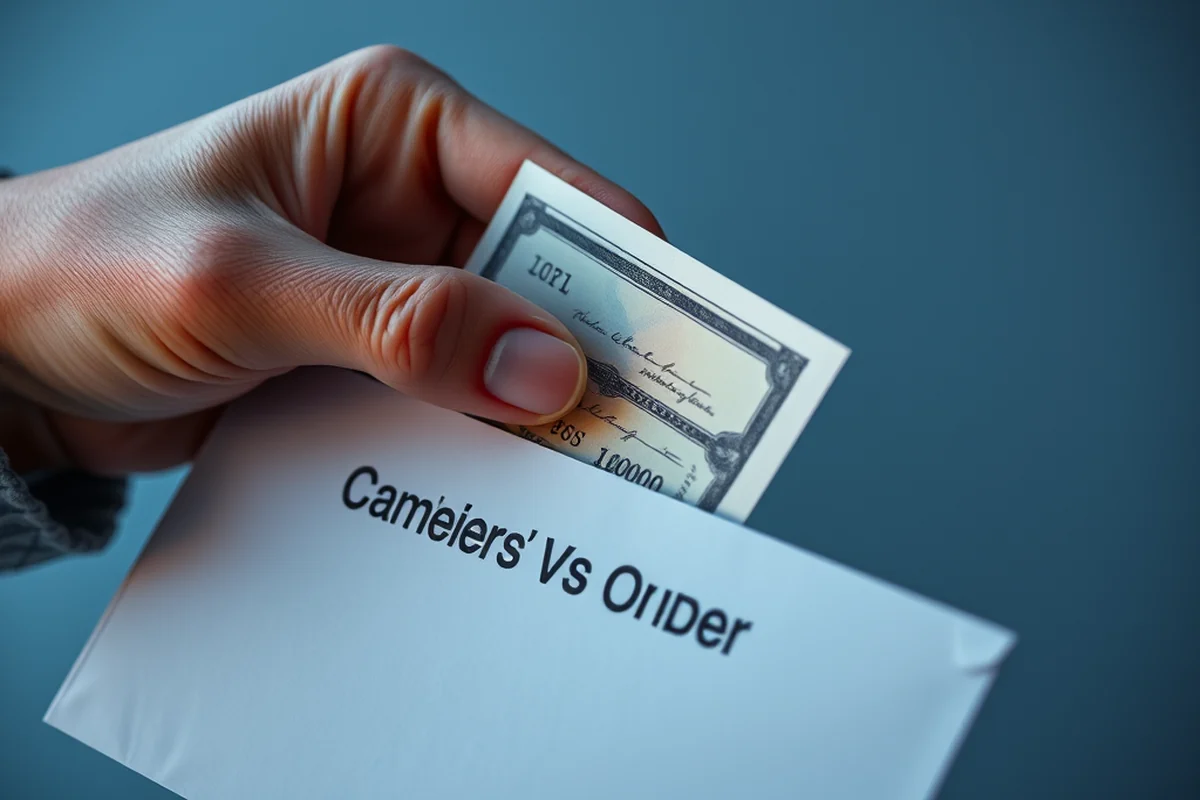
A money order is similar to a check, but it is purchased at a post office, bank, or other retail store. The amount you want to send is paid upfront, and the recipient receives a document that can be cashed or deposited like a check.
Money orders are often used by people without bank accounts or those who want to send money securely to someone else. They’re a good option for small purchases or paying bills, but they lack the level of security and trust that a cashier’s check offers.
I once used a money order to pay for a small repair job, and the contractor accepted it without question. It was a quick and easy solution, but I later realized that it wouldn’t be the best option for a larger transaction.
A money order is a simple way to send money, but it’s not the best for large purchases.
Related: Small cash envelope budgeting
Security Comparison: Cashier’s Check vs Money Order
Security is one of the biggest differences between a cashier’s check and a money order. A cashier’s check is guaranteed by the bank, making it more difficult to forge or dispute. This is why many businesses prefer cashier’s checks for official payments.
On the other hand, money orders are issued by retailers or post offices, and while they are also secure, they are not guaranteed by a bank. This makes them slightly more vulnerable to fraud or errors.
I once tried to cash a money order and found out that it had been reported as lost. The merchant had to wait for the bank to verify its authenticity, which delayed the transaction. A cashier’s check would have avoided this issue entirely.
When dealing with large amounts of money or official payments, go with a cashier’s check for added security.
“I still remember the day I tried to pay a large bill with a money order and got turned down because the recipient needed a…”— EnvelopeCash editors
Related: Best budget planner with cash envelopes
When to Use a Cashier’s Check

A cashier’s check is ideal for situations where you need a high level of trust and security. This is especially true for large purchases or official payments, such as buying a car, paying a lawyer, or making a down payment on a house.
Because a cashier’s check is backed by a bank, it is less likely to be lost, stolen, or forged. This makes it a popular choice among businesses and individuals who need to make sure the payment will go through.
I once used a cashier’s check to pay for a home down payment, and the real estate agent was very impressed with how secure the transaction was. It made me realize how important it is to use the right payment method for the right situation.
Related: Affordable cash envelope budgeting tips
When to Use a Money Order
Money orders are best suited for smaller transactions, such as paying utility bills, sending money to a friend, or making a small purchase. They are also a good option if you don’t have a bank account or want to avoid sharing your financial details with someone else.
Because they are issued by third-party retailers, money orders are not as secure as cashier’s checks. However, they are still a trusted form of payment, especially when used for small amounts.
I once used a money order to pay for a minor repair job, and the contractor was happy to accept it. It was a simple and effective way to send money without needing a credit card or bank account.
Related: Fast cash envelope budget binder
Cost Comparison: Cashier’s Check vs Money Order
Both cashier’s checks and money orders come with fees, but the cost can vary depending on the bank or retailer. Cashier’s checks typically range from $5 to $25, while money orders usually cost between $1 and $5. ($10,000, irs.gov)[2]
It’s important to check the fees at your local bank or post office before making a purchase. Some institutions may offer discounts for frequent users or customers with accounts.
I once purchased a cashier’s check at my bank and was surprised to see a $10 fee. I later found out that my bank offered a discount for customers who used their mobile banking app, which helped me save a few dollars.[3]
Always check the fees before purchasing a cashier’s check or money order.
Related: Cheap budget book with cash envelopes
Choosing the Right Payment Method for Your Needs
The best payment method for you depends on several factors, including the amount of money you’re sending, the level of security required, and the preferences of the recipient. If you’re making a large purchase or official payment, a cashier’s check is the way to go.
For smaller transactions or when you need to send money without revealing personal financial information, a money order is a good alternative. It’s always a good idea to consider the needs of the recipient and the level of trust involved.
I’ve used both cashier’s checks and money orders over the years, and I’ve learned that the right choice depends on the situation. Whether you’re paying for a car or sending a small payment, choosing the right method can make a big difference.
💰 Cashier’s Check for Large Transactions
Use a cashier’s check for high-value purchases or official payments where security is a priority.
📄 Money Order for Small Payments
A money order is ideal for sending smaller amounts of money securely without a bank account.
🏠 Cashier’s Check for Real Estate Transactions
When buying a home, a cashier’s check provides the security and trust needed for a large down payment.
🧾 Money Order for Paying Bills
A money order is a great way to pay utility bills or other recurring expenses without a credit card.
⚖️ Cashier’s Check for Legal or Official Purposes
For legal or official transactions, a cashier’s check is the most secure and reliable option.
| The mistake | Why it happens | The fix |
|---|---|---|
| Using a money order for a large purchase. | Money orders are not guaranteed by a bank and are more vulnerable to fraud or errors, making them unsuitable for high-value transactions. | Use a cashier’s check instead of a money order for large or official payments. |
| Not checking the fees before purchasing a cashier’s check or money order. | Fees can vary depending on the institution, and not knowing the cost upfront can lead to unexpected expenses. | Always ask about the fees before purchasing a cashier’s check or money order. |
| Using a money order to send money online. | Many online businesses do not accept money orders for payments, making it difficult to complete the transaction. | Use a cashier’s check or a secure online payment method instead of a money order for online transactions. |
| Assuming all cashier’s checks are the same. | Different banks may have different procedures, fees, and security measures for cashier’s checks. | Always check with your bank to understand the process and requirements for purchasing a cashier’s check. |
What Is Cashier'S Check Vs Money Order
Common Questions
What is the difference between a cashier’s check and a money order?
Which is better for large purchases: a cashier’s check or a money order?
Can I use a money order for online transactions?
What are the fees for a cashier’s check?
References
- Appendix F – Money Laundering and Terrorist Financing Red Flags (bsaaml.ffiec.gov)
- IRS Form 8300 reference guide | Internal Revenue Service (irs.gov)
- Anatomy of a fake check scam - FTC Consumer Advice (consumer.ftc.gov)
Cite this guide
EnvelopeCash (2026). What Is Cashier'S Check Vs Money Order. https://envelopecash.com/what-is-cashier-s-check-vs-money-order/
Feel free to cite or share this guide.