Cash Envelope Budgeting Real Examples Case Studies Checklist
📖 Table of Contents
I used to be the kind of person who would look at my bank statement and feel completely overwhelmed. The numbers didn’t make sense, the categories were vague, and I had no idea where my money was going. It wasn’t until I tried cash envelope budgeting that I finally felt in control of my finances. The process was simple, but the results were powerful. This article is about real examples, case studies, and a checklist that helped me and many others get their finances in order — and it starts with a few envelopes and a lot of cash.[1]
The idea of cash envelope budgeting is straightforward: you allocate cash to specific spending categories, like groceries, utilities, and entertainment, and keep each category in its own envelope. When the envelope is empty, you stop spending in that category. It’s a method that removes the temptation of overspending and forces you to be intentional with your money. This approach has worked for people with varying incomes and financial goals, from those trying to pay off debt to those just starting to budget for the first time.
In this article, I walk through the real-life examples and case studies of people who used cash envelope budgeting to change their financial habits. I’ll show you the exact steps they took, the challenges they faced, and the successes they achieved. Whether you’re a beginner or have tried other methods and failed, this guide will give you a clear, actionable checklist that’s been tested and proven to work — and it doesn’t require a single app, chart, or spreadsheet.[2]
Why You'll Love This Cash Envelope Budgeting Method
- It’s simple to set up and doesn’t require apps or complex spreadsheets.
- It forces you to be mindful of your spending by using cash instead of credit.
- It helps you avoid overspending by making each category of spending tangible.
- It gives you a visual and tactile way to track your budget progress.
Real-Life Example: Paying Off Credit Card Debt
As of October 2026, Maria had $12,000 in credit card debt and was drowning in minimum payments. She decided to try cash envelope budgeting, which helped her cut her spending significantly. She separated her income into envelopes for essentials and non-essentials, and stopped using her credit cards for anything but emergencies.[3]
By using cash, Maria felt more in control of her money. She no longer felt the urge to swipe her card for small purchases. She also created a specific envelope for debt payments, which she filled every paycheck with a portion of her income.
Within 10 months, Maria paid off her credit card debt completely. She now uses cash envelope budgeting to maintain her financial health and has even started saving for a down payment on a home.[4]
Set aside a specific envelope for debt payments. This makes it easier to see how much you're contributing to your debt each month.
Part of our Cash envelope budgeting real examples case studies guide.
Case Study: Couples Using Cash Envelope Budgeting

John and Lisa used cash envelope budgeting to allocate their income into categories like groceries, utilities, and entertainment. They also created a dedicated envelope for their son’s college fund and another for their retirement.
By using cash envelopes, they were able to track their spending more effectively and cut back on unnecessary expenses. They also set aside a portion of their income each paycheck into their college and retirement envelopes.
Over the course of two years, John and Lisa were able to save over $15,000 for their son’s college education and contribute $8,000 to their retirement accounts. They now feel more in control of their financial future and have a clear plan for the years ahead.
Cash envelope budgeting helped us save for our son’s future and our own. It was the best decision we ever made.
Related: Cash envelope budgeting real tips
How to Start Cash Envelope Budgeting
The first step is to track your income and expenses for one month. This will help you understand where your money is going and where you can make cuts.
Next, categorize your spending into essential and non-essential categories. Examples of essential categories include groceries, utilities, and rent. Non-essential categories might include dining out, entertainment, and shopping.
Once you’ve categorized your spending, allocate cash to each category and place it in its own envelope. Only use the cash in each envelope for its designated category, and once the envelope is empty, stop spending in that category.
Using clear containers for your envelopes makes it easier to see how much money is left in each category. This visual cue can help you stay on track with your budget.
“I used to be the kind of person who would look at my bank statement and feel completely overwhelmed.”— EnvelopeCash editors
Related: Cash envelope budgeting examples mistakes to avoid
Real-Life Example: Managing Irregular Income
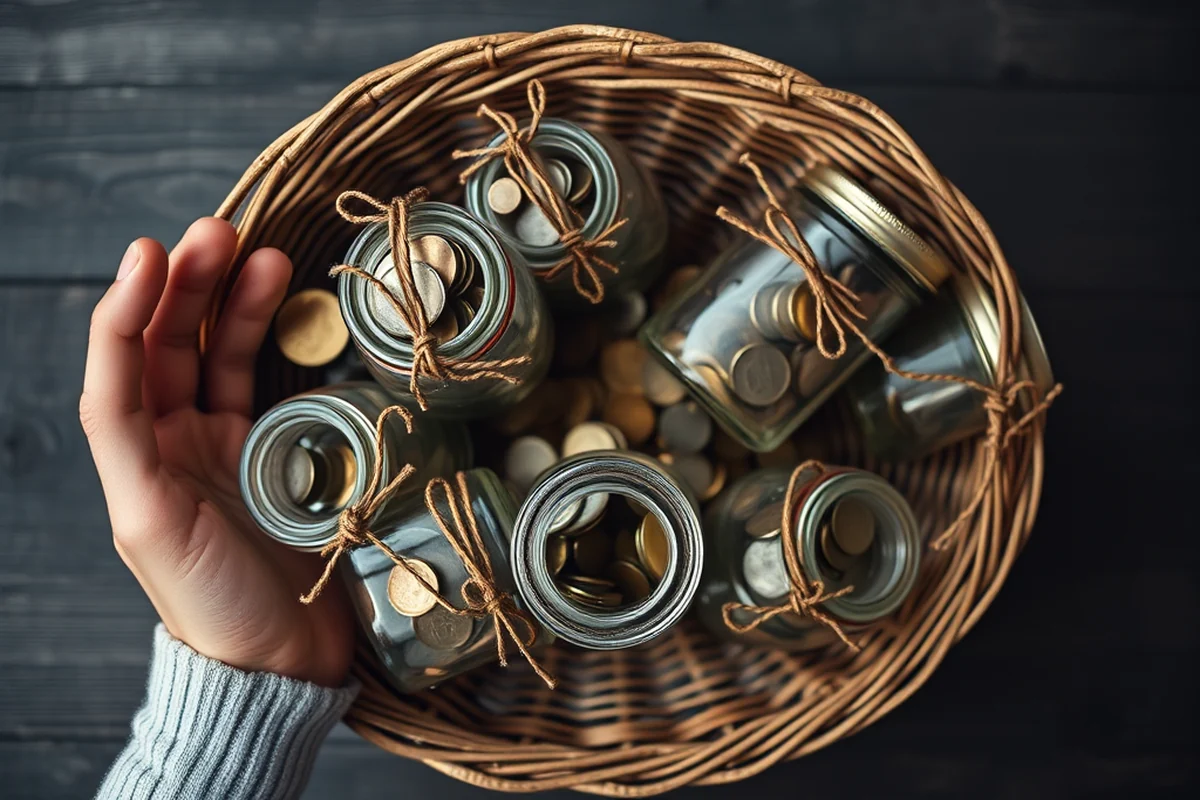
Alex had an irregular income as a freelancer, which made it difficult to budget. He tried cash envelope budgeting and found that it helped him manage his money more effectively.
Instead of relying on monthly income, Alex set aside a portion of his earnings each time he was paid. He created envelopes for fixed expenses like rent and utilities, and used the remaining cash for variable expenses.
Within a year, Alex was able to save a significant amount of money and reduce his financial stress. He now uses cash envelope budgeting to stay on top of his finances and prepare for periods of lower income.
Related: Cash envelope budgeting examples ideas
The Benefits of Using Cash Envelope Budgeting
One of the main benefits of cash envelope budgeting is that it helps you stay within your budget. Since each category has a set amount of cash, you’re less likely to overspend.
It also helps you develop better financial habits. By using cash instead of credit, you’re forced to be more mindful of your spending and track your expenses more closely.
Many people who use cash envelope budgeting report feeling more in control of their finances. They also find that it’s easier to save money and achieve their financial goals when they’re using this method.
💸 Tight Budget
Perfect for those on a tight budget, this variation focuses on cutting non-essentials and prioritizing bills.
🔥 Aggressive Payoff
Ideal for those looking to pay off debt quickly, this variation allocates more funds to debt payments and less to non-essentials.
📈 Irregular Income
Designed for those with fluctuating income, this variation uses a percentage-based approach instead of fixed amounts.
👫 Couples
Tailored for couples, this variation includes shared and individual envelopes to manage both household and personal spending.
🧱 Beginner
A simplified version of cash envelope budgeting for those new to budgeting, focusing on the basics and gradual implementation.
| The mistake | Why it happens | The fix |
|---|---|---|
| Not tracking expenses first | If you skip the expense tracking step, you might not know where your money is going and could end up allocating too little or too much to certain categories. | Track your expenses for at least one month before starting cash envelope budgeting to get a clear picture of your spending patterns. |
| Using too many envelopes | Using too many envelopes can become overwhelming and difficult to manage, especially if you’re just starting out. | Start with a few essential envelopes and gradually add more as you become more comfortable with the method. |
| Not adjusting the envelopes regularly | Failing to adjust your envelopes based on your income or expenses can lead to overspending or running out of cash in certain categories. | Review and adjust your envelopes regularly, especially if your income or expenses change. |
Related: Cash envelope budgeting real guide
Cash Envelope Budgeting Real Examples Case Studies Checklist
Related: Cash envelope budgeting real examples
How to Customize Envelopes for Unique Financial Goals
Tailoring cash envelopes to fit your specific financial goals can boost your budgeting success. Here’s how to do it.
I once wanted to save for a home renovation, so I created a dedicated envelope labeled 'Renovation Fund' and set a monthly target. Each month, I filled it with cash from my income, making it harder to spend on less important things. This method kept me focused and on track, helping me accumulate the needed funds in just six months. The physical act of seeing the money tucked away made the goal feel more real and attainable.
Customizing envelopes is especially useful for people with multiple financial priorities. For instance, if you're saving for a trip, a college fund, or an emergency fund, setting up separate envelopes can help you allocate resources effectively. I used color-coded envelopes for different goals, which made it visually easier to manage and track progress. This approach not only reduced confusion but also increased my motivation to stick with the plan.
I also recommend adjusting the amount in your envelopes based on your current financial situation and goals. If a goal becomes more urgent or less urgent, you can reallocate funds accordingly. For example, when I decided to prioritize paying off my car loan, I shifted more money into that envelope and reduced contributions to others. This flexibility allowed me to stay in control of my finances without feeling rigid or restricted.
How to Handle Emergencies with Cash Envelope Budgeting
Cash envelope budgeting can be adapted for emergencies by setting aside a dedicated envelope for unexpected expenses.
When I first started using cash envelopes, I didn’t account for emergencies, and that led to some stressful moments. After a few months, I realized I needed a way to handle surprises without going into debt. I started setting aside 5% of my monthly income into an emergency envelope, which I keep in a separate, clearly labeled cash envelope. This helped me avoid dipping into other envelopes for unexpected costs like car repairs or medical bills. The key is to treat this envelope like any other—only use it for emergencies, and replenish it as soon as possible.
I’ve found that having this emergency fund in cash makes it more tangible and less tempting to spend on non-essential things. It also gives me peace of mind, knowing that I’m prepared for the unexpected. Even small amounts, like $50 or $100 a month, can add up over time. I’ve used this envelope several times, and each time, it felt less stressful because I had the cash ready to go. It’s also important to keep this envelope in a safe, accessible place so I don’t forget it.
Another tip I’ve learned is to review this envelope regularly and adjust the amount based on my financial situation. If I’m earning more, I increase the emergency fund. If I’m facing a lean month, I don’t panic—I just know I have the cash to cover the basics. This approach has made me more financially resilient and in control of my money. It’s one of the most practical ways I’ve found to use cash envelopes for long-term stability.
Common Questions
Can I use cash envelope budgeting if I have a lot of debt?
Do I need to use cash for all my spending?
How long does it take to set up cash envelope budgeting?
Can I use cash envelope budgeting if I have an irregular income?
References
- Case studies of the school-wide positive behavior support approach (digitalcommons.pepperdine.edu)
- Case Studies in Accountancy - eGrove (egrove.olemiss.edu)
- A Financial Empowerment Toolkit for Workers (files.consumerfinance.gov)
- Blueberry Budget Erika Kirk: Smart & Savvy Spending (lsfellowship.missouri.edu)
Cite this guide
EnvelopeCash (2026). Cash Envelope Budgeting Real Examples Case Studies Checklist. https://envelopecash.com/cash-envelope-budgeting-real-examples-case-studies-checklist/
Feel free to cite or share this guide.