
Cash Envelope Budgeting Guides Mistakes To Avoid
📖 Table of Contents
The first time I tried cash envelope budgeting, I thought I had it all figured out. I neatly labeled envelopes for groceries, utilities, and transportation. I placed them in a drawer and felt a surge of control. But by the second week, I was digging into the 'miscellaneous' envelope for a late-night coffee, only to find $3 left in a $50 envelope. That moment was a wake-up call — I had missed the crucial step of estimating expenses accurately, and it cost me more than just a few dollars. Cash envelope budgeting is a powerful tool, but without the right approach, it can lead to frustration and failure.[1]
Over the next few months, I refined my method, learning from my mistakes and those of others. What I discovered was that cash envelope budgeting is not just about dividing money into categories — it's about discipline, awareness, and planning. One of the biggest mistakes I made early on was not accounting for unexpected expenses like car repairs or medical bills. This led to a scramble for cash, which defeated the purpose of the system. The key is to approach it with a mindset that includes flexibility and realism.
Now, I run a blog called Cash Envelope Budgeting, where I share the lessons I’ve learned. I’ve helped hundreds of readers avoid the common pitfalls and achieve financial clarity. One of the most frequent complaints I hear is that people feel overwhelmed or confused when they first start. But with the right guidance, cash envelope budgeting can be a simple, effective way to manage money — and avoiding the mistakes I made can make all the difference. This article is here to help you do exactly that.
Why You'll Love This Budgeting Strategy
- It gives you a tangible way to track and control your spending.
- It helps you avoid unnecessary debt by enforcing spending limits.
- It reduces financial stress by keeping your money in check.
- It's easy to set up and requires minimal ongoing effort.
Underestimating Your Expenses
As of August 2026, many people start by estimating their expenses based on past habits or ideal scenarios, rather than realistic figures. For instance, I once allocated only $200 for groceries, assuming I'd only need that for a month. But by the second week, I had already spent $220 and had to dig into my 'entertainment' envelope to cover the difference. That was a painful lesson in the importance of overestimating, not underestimating.[2]
A better approach is to use a 3-6 month average of your expenses. I recommend tracking your spending for at least a month before setting up your envelopes. This gives you a more accurate picture of your needs and helps you avoid running out of money in crucial categories.[3]
One of my readers, a single mother of two, shared how she used this strategy to save $2,000 in her first month by overestimating her food and childcare costs. She now keeps that extra money in a separate envelope for emergencies.[4]
Track your expenses for at least a month and average them out before creating your envelopes. This helps you avoid underestimation and ensures your envelopes are realistic.
Part of our Cash envelope budgeting step by step guides guide.
Not Using the Right Envelope Sizes
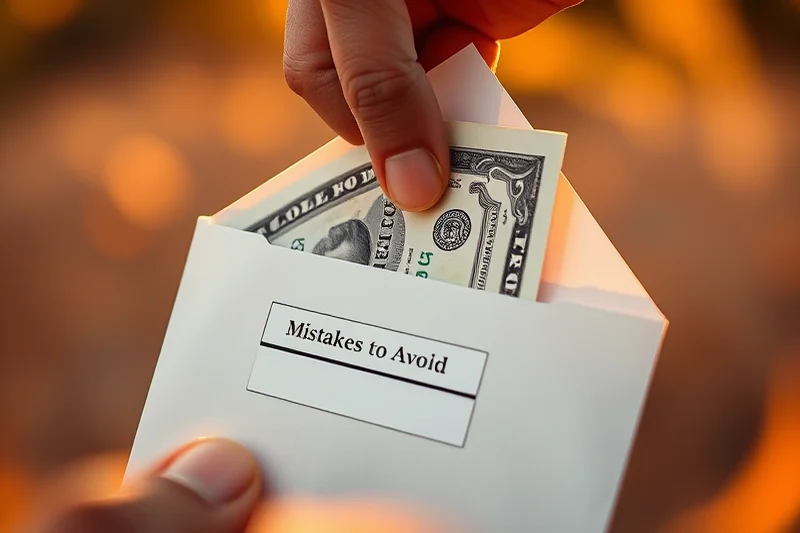
I once used a large envelope for everything, thinking it would be easier to manage. But this led to confusion and overspending in non-essential categories. The truth is, the right envelopes should be sized and labeled clearly so you can see exactly how much money you have available for each category at a glance.
For instance, I now use small, labeled envelopes for daily expenses like groceries and gas, and larger envelopes for monthly expenses like rent and insurance. This makes it easier to keep track of where your money is going and prevents overspending.
I’ve found that using the right number of envelopes — typically 10-15 — is ideal for most people. Too few can lead to confusion, while too many can become overwhelming.
Size and clarity matter — use the right envelopes for the right expenses.
Related: Best cash envelope budgeting guides
Related: Simple cash envelope budgeting step by step guides
Related: Cash envelope budgeting step on a budget
Related: Cash envelope budgeting step by step guides checklist
Related: Cash envelope budgeting step by step guides that actually work
Related: Budget Cash Envelope Budgeting Guides
Related: Envelope To And From Format
Ignoring the 'Unexpected' Category
One of the biggest surprises I faced was an unexpected car repair bill. I didn’t have a fund set aside for that, and I had to take money from my 'entertainment' envelope, which threw my entire budget off track. This taught me the importance of having an 'emergency' or 'unexpected' envelope that you can draw from without disrupting your other categories.
I now recommend setting aside at least 5-10% of your monthly income for this category. It’s a small amount that can make a big difference when unexpected expenses arise. For example, if you earn $3,000 a month, setting aside $300 for emergencies is a practical and realistic approach.
Another reader, a teacher, shared how having an 'unexpected' envelope helped her pay for a last-minute home repair without dipping into her savings. She now recommends this as an essential part of any cash envelope budget.
Set aside at least 5-10% of your income for unexpected expenses. This prevents you from dipping into other envelopes or your savings when surprises arise.
“The first time I tried cash envelope budgeting, I thought I had it all figured out.”— EnvelopeCash editors
Not Reviewing and Adjusting the Budget

Many people set up their envelopes once and never look at them again. This is a mistake, because your expenses can change over time. For instance, I initially set aside $100 for transportation, but after a few months, that amount increased due to rising gas prices. I had to adjust my envelopes to account for this change.
I now review my budget every week and make adjustments as needed. This allows me to stay on track and avoid running out of money in key categories. It also helps me identify areas where I can save more or where I need to increase my allocations.
One of my readers, a freelance graphic designer, shared how reviewing and adjusting his budget every month helped him save $500 in his first year. He now recommends doing the same to stay aligned with your financial goals.
Not Involving Others in the Process
When I first started using cash envelope budgeting, I kept it a secret from my partner. I thought it would be easier that way, but it backfired. He didn’t know where the money was going, and I ended up spending on things he didn’t agree with. This led to tension and confusion.
Now, I recommend involving your partner or family members in the process. This ensures that everyone is on the same page and helps prevent disagreements over spending habits. It also makes the process more transparent and fair.
One of my readers, a couple with two children, shared how involving their kids in the budgeting process helped them understand the value of money. They now set aside a small amount for a 'family fun' envelope, which the whole family contributes to and uses for outings and events.
💸 Tight Budget
Ideal for those with limited income, this plan focuses on cutting back on non-essentials and prioritizing needs over wants.
⚡ Aggressive Payoff
This plan is for those who want to pay off debt quickly. It involves allocating more money to debt repayment and cutting back on discretionary spending.
💰 Irregular Income
Designed for people with unpredictable income, this plan uses a 3-month average and allows for more flexibility in allocations.
👫 Couples
This plan encourages joint budgeting and communication. It helps couples align their spending habits and avoid financial conflicts.
🎓 Beginner
A simple, step-by-step approach for those new to budgeting. It focuses on the basics and gradually builds up to more complex strategies.
| The mistake | Why it happens | The fix |
|---|---|---|
| Underestimating Expenses | This leads to running out of money in critical categories and having to borrow or use savings. | Track your spending for at least a month and use that data to create realistic allocations. Overestimate by 10-15% to account for unexpected costs. |
| Not Using the Right Envelope Sizes | Using the wrong size envelopes can lead to confusion and make it difficult to track your spending. | Use clearly labeled envelopes that are the right size for each category. This makes it easier to manage your money and avoid overspending. |
| Ignoring the 'Unexpected' Category | Failing to account for unexpected expenses can lead to financial stress and the need to dip into savings or take on debt. | Set aside at least 5-10% of your income for unexpected expenses. This ensures you're prepared for surprises without disrupting your other categories. |
| Not Reviewing and Adjusting the Budget | Failing to review your budget can lead to inefficiencies and overspending in key areas. | Review your budget every week and make adjustments as needed. This helps you stay on track and avoid running out of money in essential categories. |
Cash Envelope Budgeting Guides Mistakes To Avoid
Common Questions
How do I know how much to put in each envelope?
What if I run out of money in an envelope?
Can I use cash envelope budgeting if I have a credit card?
How often should I review my budget?
References
- YOUR 30 STEP PATH TO FINANCIAL WELLNESS | A-B Tech (abtech.edu)
- Mental Budgeting and Consumer Decisions (bear.warrington.ufl.edu)
- October Wellness Spotlight - University of North Dakota Blogs (blogs.und.edu)
- Budgeting for a Week: A Realistic Approach | Uillinois (blogs.uofi.uillinois.edu)
Cite this guide
EnvelopeCash (2026). Cash Envelope Budgeting Guides Mistakes To Avoid. https://envelopecash.com/cash-envelope-budgeting-guides-mistakes-to-avoid/
Feel free to cite or share this guide.