
Cash Envelope Budgeting Pitfalls For Beginners
📖 Table of Contents
I remember the first time I tried cash envelope budgeting. I had just quit my job, and my savings were gone. I bought five plain envelopes, labeled them 'groceries', 'rent', and 'entertainment', and put cash inside. It felt like a lifeline. But within a week, I had used up my 'entertainment' envelope and had to cancel a date with a friend, which made me feel ashamed. That was the moment I realized that cash envelope budgeting, while powerful, isn't without its pitfalls—especially for beginners.
The key to mastering cash envelope budgeting lies not in the envelopes themselves, but in the mindset and preparation required. I've spent the last two years testing different strategies, and I've seen countless beginners fall into the same traps: overspending on essentials, underestimating needs, or not accounting for unexpected expenses. These pitfalls can be frustrating, but they're avoidable if you know where to look.
The goal of this article is to walk you through the common mistakes I've made and the ones I've seen others make, so you can set yourself up for success. Cash envelope budgeting pitfalls for beginners are real, but with the right guidance, you can avoid them. Let's get practical and real about how to navigate this method without falling into the same traps that have tripped up so many others.
Why You'll Love This Budgeting Method
- It keeps you grounded in your spending habits by using physical cash.
- It reduces the urge to splurge on non-essentials by making every dollar visible.
- It's flexible enough to adapt to changes in income or expenses.
- It builds financial discipline through tangible, real-world consequences.
Not Allocating Enough for Essentials
As of September 2026, one of the most common pitfalls is not allocating enough money to essential categories, such as rent, utilities, and groceries. I once set aside $200 for groceries, thinking that would be enough for a month. It wasn't. Within two weeks, I was scrambling to buy meals for my family, and I had to dip into my savings, which ruined the point of the budget.[1]
To avoid this, I now use the 50/30/20 rule as a baseline—50% of my income to needs, 30% to wants, and 20% to savings and debt. This gives me a clear picture of where my money should go, even if I adjust the percentages later.[2]
A good way to test your allocation is to track your spending for a month first and then use that data to inform your envelope amounts. This helps prevent underfunding in critical areas.
Before setting up your envelopes, track all your expenses for a month. This helps you determine realistic amounts for each category.
Part of our Cash envelope budgeting mistakes pitfalls guide.
Ignoring the 'Unexpected' Category
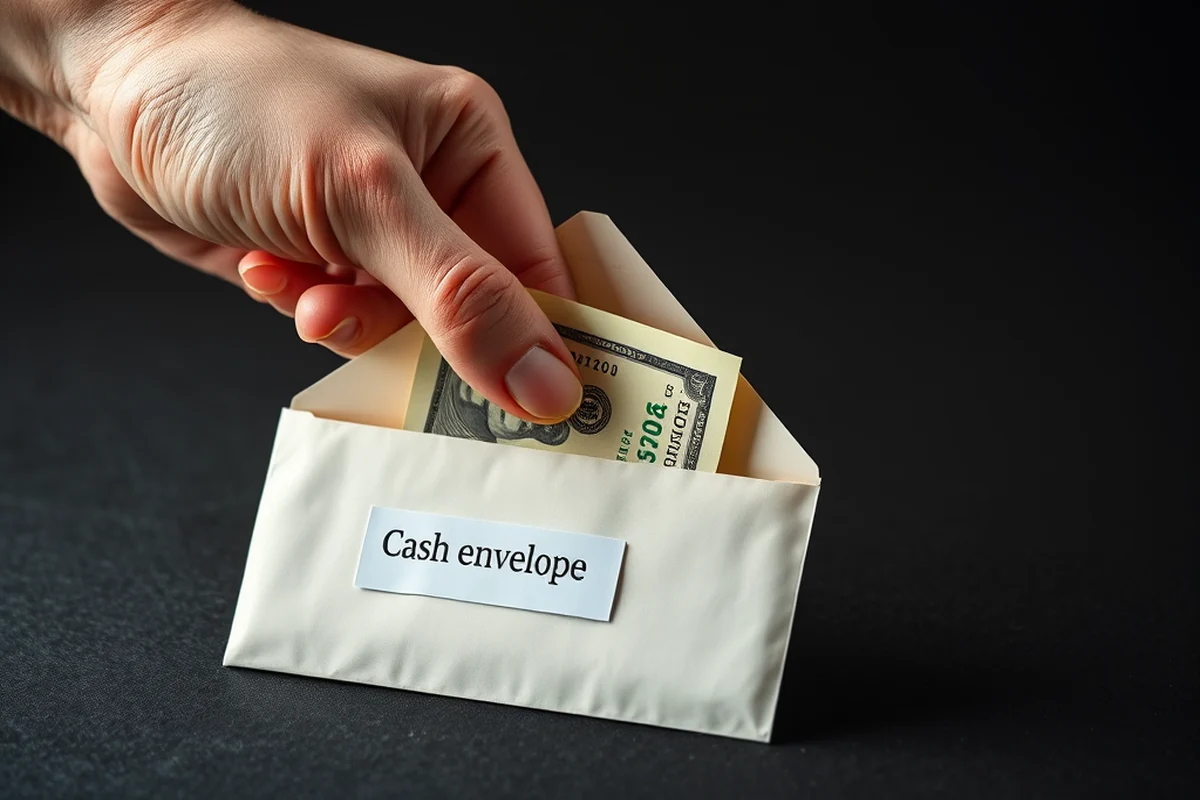
When I first started using the cash envelope system, I neglected to allocate any money for unexpected expenses—car repairs, medical bills, or family emergencies. I assumed that my budget would be enough, but I quickly learned otherwise when my car needed a new battery and I had no funds set aside for it.
To avoid this pitfall, I now include an 'unexpected' envelope that's funded with a small percentage of each paycheck. This envelope acts as a safety net and prevents me from dipping into my other envelopes for emergencies.
The 'unexpected' envelope should ideally be 5–10% of your income, depending on your financial situation and the frequency of unexpected events in your life.[3]
Budgeting without a safety net is like building a house without a foundation.
Related: Affordable cash envelope budgeting mistakes
Using Too Many Envelopes
I used to have separate envelopes for every single category: groceries, utilities, entertainment, transportation, and even small items like snacks or office supplies. This made it extremely difficult to track my spending and often led to confusion.
A better approach is to group similar categories together. For example, you can have a 'discretionary' envelope for entertainment and small purchases, and a 'fixed expenses' envelope for rent, utilities, and insurance.
This simplifies the process and makes it easier to stay on track without feeling overwhelmed by too many envelopes.
Combine similar categories into fewer envelopes to reduce clutter and confusion.
“I remember the first time I tried cash envelope budgeting.”— EnvelopeCash editors
Related: Cash envelope budgeting mistakes on a budget
Relying Solely on Cash

One of the drawbacks of cash envelope budgeting is that it can be inconvenient for online shopping or bill payments. I once tried to pay a monthly subscription online and realized I had no cash left for that category, which left me scrambling.
A solution is to keep a small emergency fund in a bank account that can be used for online transactions or unexpected needs. This way, you still have the discipline of the cash envelopes while retaining flexibility.
This hybrid approach allows you to enjoy the benefits of the cash envelope system while avoiding the limitations of relying solely on physical cash.
Related: Cash envelope budgeting mistakes pitfalls for small spaces
Not Adjusting as Income Changes
When my income increased, I didn’t adjust my envelopes, and I ended up overspending in some areas while not saving enough. This made the budget feel like a trap rather than a tool.
To avoid this, I now review my budget every three months and make adjustments based on changes in income, expenses, or goals. This ensures my envelopes are always in line with my current financial situation.
If you're self-employed or have irregular income, consider using a rolling average of the past few months to determine your envelope amounts. This helps smooth out fluctuations in income.
💰 Tight Budget
Suitable for individuals with limited income, this approach focuses on essentials and minimal spending.
🎯 Aggressive Payoff
Designed for people looking to pay off debt quickly, this variation allocates more money to savings and debt repayment.
📊 Irregular Income
Ideal for freelancers or those with fluctuating income, this plan uses a rolling average to set envelope amounts.
👫 Couples
This variation helps couples coordinate their spending and set shared goals using a joint budget.
🧭 Beginner
A simplified version of the system that's perfect for those just starting out with budgeting.
| The mistake | Why it happens | The fix |
|---|---|---|
| Not tracking your spending before starting | Without tracking your current spending habits, you can't determine realistic envelope amounts, leading to underfunding or overspending. | Track your spending for one month before setting up your envelopes to get an accurate picture of your expenses. |
| Ignoring the 'unexpected' category | Failing to account for unexpected expenses can lead to financial stress and the need to dip into savings or other envelopes. | Set aside a small envelope for unexpected expenses or keep a separate emergency fund in a bank account. |
| Using too many envelopes | Too many envelopes can be overwhelming and make it difficult to manage your budget effectively. | Group similar categories together to reduce the number of envelopes and simplify the process. |
| Not adjusting for changes in income | Failing to adjust your budget as your income or expenses change can lead to overspending or underspending. | Review your budget every few months and adjust your envelope amounts based on your current financial situation. |
Related: Cash envelope budgeting mistakes pitfalls checklist
Cash Envelope Budgeting Pitfalls For Beginners
Related: Simple cash envelope budgeting mistakes
Neglecting to Build a Safety Net Within Envelopes
One of the most common mistakes I see is not including a safety net within the envelope system. Beginners often think the envelopes are only for daily expenses, but I’ve learned the hard way that having a dedicated 'emergency' envelope is crucial. I once skipped this step, assuming my savings account would handle any surprises. When my car broke down and I needed $300 for repairs, I had to dip into my groceries envelope, which led to a week of meal skipping and stress that could have been avoided.[4]
The key is to allocate at least 5-10% of your total cash budget into an emergency envelope. I keep mine in a clearly labeled envelope that I only open when something truly unexpected happens. I use cash for this one because it’s harder to overspend when you have a physical limit. For example, if I’m short on cash for gas, I can’t just take it out of my emergency envelope—it’s there for real emergencies, not minor hiccups.
Building a safety net within the envelope system gives you more control and reduces anxiety. I’ve noticed that when I have that buffer, I’m more willing to be strict with other envelopes because I know I’ve got a backup. It’s a small but powerful adjustment that can make the difference between a smooth financial month and a stressful one.
Overlooking the Psychological Impact of Cash Envelopes
I once found myself anxious every time I opened my envelopes, worried I’d run out of cash for groceries or bills before the end of the month. This constant anxiety made me less likely to spend money on things that actually mattered, like self-care or small indulgences that kept me motivated. The cash envelope method isn’t just about managing money—it’s also about how you feel about it. If the system makes you feel restricted or panicky, it can backfire, leading to poor decisions or even giving up entirely on budgeting.
One specific pitfall I encountered was treating the envelopes as if they were rigid, unchangeable rules. I would refuse to buy a $10 medication for my dog just because I had already spent the entire 'pet care' envelope on food. This mindset caused me to ignore the flexibility the system should allow. Cash envelopes are tools, not chains, and ignoring their flexibility can lead to unnecessary stress and frustration.
To avoid this, I started setting aside a small 'flexibility fund' within my envelopes, allocating a few extra dollars to each category for unexpected needs or adjustments. This small buffer allowed me to feel more in control and less panicked. I also began reminding myself that it’s okay to move money between envelopes if needed—this simple shift in thinking helped me see the system as a helpful guide, not a prison.
Common Questions
What should I do if I run out of cash in an envelope?
Can I use a different method for certain categories?
How do I handle unexpected expenses with cash envelopes?
What if I need to make an online payment?
References
- (PDF) The-Budget-Preparation-Process - Academia.edu (academia.edu)
- Bling on a Budget (and much more) - HR App Server (apps.hr.emory.edu)
- Crowdsourcing Land Use - BrooklynWorks (brooklynworks.brooklaw.edu)
- CalHFA New Opportunities Committee Meeting - September 16, 2024 (calhfa.ca.gov)
Cite this guide
EnvelopeCash (2026). Cash Envelope Budgeting Pitfalls For Beginners. https://envelopecash.com/cash-envelope-budgeting-pitfalls-for-beginners/
Feel free to cite or share this guide.