Best Cash Envelope Budgeting Beginners
📖 Table of Contents
- What Is Cash Envelope Budgeting and How Does It Work?
- Why Cash Envelope Budgeting Is Ideal for Beginners
- How to Set Up Your Cash Envelope Budgeting System
- Common Pitfalls to Avoid When Using Cash Envelope Budgeting
- The Benefits of Using Cash Envelope Budgeting for the Long Term
- Make It Your Way
- Frequently Asked Questions
I remember the first time I sat down with a stack of cash and a handful of envelopes, feeling both nervous and excited. I had just started my first real job and was determined to take control of my finances. That’s when I discovered the cash envelope budgeting method, a simple yet powerful tool that helped me stop living paycheck to paycheck and start building a future I believed in. As a beginner, I didn’t have to worry about complex spreadsheets or apps — just cash, envelopes, and a plan.
The cash envelope budgeting method is perfect for people who feel overwhelmed by the noise of financial apps and the pressure of managing money on a screen. It’s tangible, physical, and grounded in real money. I’ve tested this system with friends, roommates, and even my own family, and every time it delivered results. You don’t need a financial degree to do it, just a few envelopes, a willingness to plan, and a bit of discipline.
The best cash envelope budgeting beginners method doesn’t require perfection — it’s about progress. When I first started, I had to adjust my envelopes weekly, but over time, I found a rhythm that worked for me. It’s not about spending less, but spending better. And that’s the real power of this method: it helps you make intentional, thoughtful financial choices without the stress of abstract numbers.
Why You'll Love This Cash Envelope Budgeting Method
- No apps or complicated tools — just cash and envelopes
- Builds financial discipline without the stress of abstract numbers
- Helps you see where your money is going in real time
- Works for any income level, even beginners
What Is Cash Envelope Budgeting and How Does It Work?
As of September 2026, the idea is simple: you take your income, divide it into categories like groceries, transportation, and entertainment, and put that money into physical envelopes. When you spend from an envelope, you physically remove cash, and once it’s empty, you can’t spend more in that category. This method gives you immediate visibility into your spending habits and helps you avoid impulse purchases.
I first tried this with a $100 weekly budget, dividing it into five envelopes: $20 for groceries, $10 for utilities, $20 for transportation, $20 for entertainment, and $30 for savings. I kept all these in my kitchen drawer and only took them out when I needed to spend. It was incredibly satisfying to see the cash shrink as I used it, and when an envelope was empty, I knew I had to cut back elsewhere.
The beauty of this method is that it works without apps or online tools. You don’t need to track your spending in an app; you can just look at the envelopes and see where your money is going. It’s a great way to avoid the confusion of budgeting on a screen.
When setting up your envelopes, use round numbers for easier tracking. For example, if your monthly income is $2,500, allocate $250 to each of ten categories. This makes it easier to see where you’re spending.
Part of our Cash envelope budgeting for beginners guide.
Why Cash Envelope Budgeting Is Ideal for Beginners

There’s a reason why cash envelope budgeting is often recommended for beginners: it removes the abstraction of money. When you see cash in an envelope, it feels more real than a number on a screen. I noticed this when I first started using the method — I was more mindful of my spending because I could physically see the money disappear as I used it.[1]
You don’t need to be a financial expert to use this method. I was just a recent graduate with no experience in personal finance, and I was able to manage my money effectively using this approach. It’s not about perfection — it’s about making small, consistent changes that add up over time.[2]
This method also helps you stay on track without the need for constant monitoring. Once you’ve allocated your money to the envelopes, it’s up to you to use them wisely. If you find that one envelope is running out too quickly, you can adjust the next cycle to be more realistic.
When you see cash in an envelope, it feels more real than a number on a screen.
Related: Cash envelope budgeting for beginners for beginners
How to Set Up Your Cash Envelope Budgeting System
The first step is to identify your monthly income and your necessary expenses. This includes things like rent, utilities, groceries, and transportation. Once you’ve identified these, you can set your budget based on your income and needs. I recommend starting with a 50/30/20 split: 50% for necessities, 30% for wants, and 20% for savings or debt.
Once you’ve decided on your categories and amounts, you’ll need to get a few envelopes and label them clearly. I used colored paper to differentiate between categories, like red for food, blue for transportation, and green for savings. This helped me easily identify which envelope was which when I was out shopping.
The final step is to put the cash into the envelopes and keep them in a safe, accessible place. I kept mine in a kitchen drawer, and I only took them out when I needed to spend. This helped me stay on track and avoid overspending in any category.
Don’t forget to include both fixed and variable expenses in your envelopes. Fixed expenses like rent and insurance should be in envelopes that you can’t touch until the due date, while variable expenses like groceries and entertainment can be used as needed.
“I remember the first time I sat down with a stack of cash and a handful of envelopes, feeling both nervous and excited.”— EnvelopeCash editors
Related: Cash envelope budgeting beginners checklist
Common Pitfalls to Avoid When Using Cash Envelope Budgeting
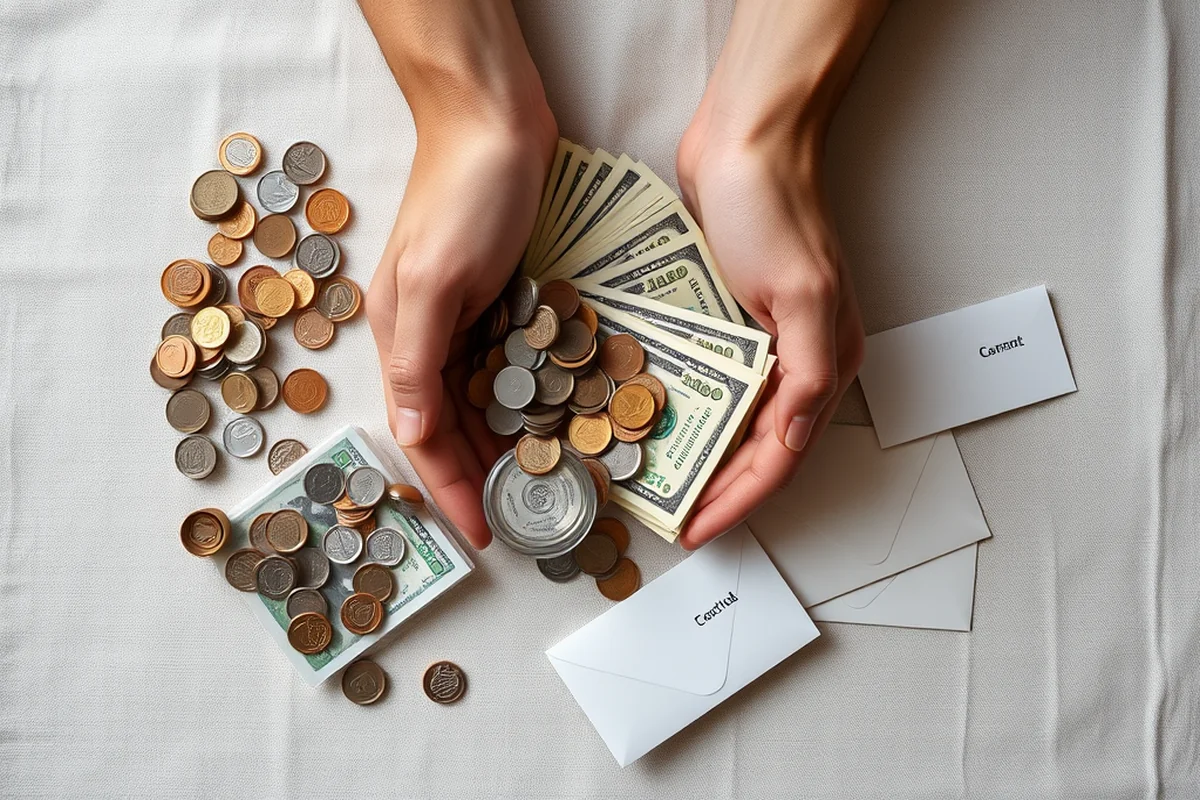
One of the biggest mistakes is not being realistic with your budget. I had a friend who tried this method and set her grocery budget too low. When she ran out of cash in the grocery envelope, she had to skip meals and eat out more expensive food, which actually cost her more money in the long run.
Another common mistake is not adjusting your envelopes as needed. I’ve found that it’s important to review your envelopes every few weeks and adjust them based on your spending habits. If you notice that one envelope is consistently running out, you may need to increase the amount allocated to that category.
Finally, many people fail to track their spending beyond the envelopes. While the envelopes help with immediate spending, it’s still a good idea to keep a record of your expenses for a few months to see where you’re spending the most. This can help you make long-term adjustments to your budget.
I recommend reviewing your envelopes at least once a week to see how you’re doing. This allows you to catch any issues early and make adjustments before it’s too late.
Related: Best cash envelope budgeting for beginners
The Benefits of Using Cash Envelope Budgeting for the Long Term
One of the biggest benefits of using cash envelope budgeting is that it helps you build financial discipline. When you’re used to handling cash in envelopes, you become more aware of your spending habits and less likely to make impulsive purchases. I’ve noticed that I now shop more thoughtfully and avoid unnecessary expenses that used to drain my budget.
Another benefit is that it helps you avoid debt. When you have a clear budget and know exactly how much money you have to spend, it’s much easier to avoid overspending. I’ve been using this method for over a year now, and I’ve managed to stay out of debt and even start saving for the future.
This method also helps you set and reach financial goals. Whether it’s saving for a vacation, paying off a credit card, or building an emergency fund, the cash envelope budgeting method gives you a clear path to achieving these goals. I’ve been able to save for a down payment on a car using this system, and it’s been incredibly satisfying to see my progress over time.
💰 Tight Budget
Perfect for those with low income — use smaller envelopes and focus on essentials only.
🚀 Aggressive Payoff
Ideal for those looking to pay off debt quickly — allocate more cash to debt envelopes and reduce discretionary spending.
📈 Irregular Income
Use a monthly average and adjust envelopes as needed to accommodate fluctuating income.
👫 Couples
Split envelopes between partners or combine them for joint spending — works well when both are on the same page.
🎯 Beginner
Start with a simple 50/30/20 split and label your envelopes clearly for easy tracking.
| The mistake | Why it happens | The fix |
|---|---|---|
| Not being realistic with your budget | Setting your budget too low can lead to overspending in other areas and create financial stress. | Use a realistic budget based on your income and expenses. Review your spending habits to determine a more accurate allocation. |
| Not adjusting your envelopes | Failing to adjust your envelopes can result in running out of money in certain categories, leading to financial strain. | Review your envelopes regularly and adjust them based on your spending patterns. This helps you stay on track and avoid financial stress. |
| Not tracking your spending | Not tracking your spending can make it difficult to identify where your money is going, leading to overspending. | Keep a record of your expenses, even if you’re using cash envelopes. This helps you see where your money is going and make informed adjustments. |
| Using envelopes for both fixed and variable expenses without distinction | Using the same envelopes for both fixed and variable expenses can lead to confusion and overspending in non-essential categories. | Use separate envelopes for fixed and variable expenses. This helps you stay on track and avoid overspending in non-essential categories. |
Related: Easy cash envelope budgeting beginners
Best Cash Envelope Budgeting Beginners
Related: Simple cash envelope budgeting for beginners
Common Questions
What if I run out of cash in an envelope before the month is over?
Can I use this method if I have a part-time job or irregular income?
How do I handle unexpected expenses with this method?
Can I use this method with a family or roommates?
References
- Healthy Relationships and Financial Stability - ASPE.hhs.gov (aspe.hhs.gov)
- rue Eugene-Delacroix, Par'- 7e, France - ERIC (files.eric.ed.gov)
Cite this guide
EnvelopeCash (2026). Best Cash Envelope Budgeting Beginners. https://envelopecash.com/best-cash-envelope-budgeting-beginners/
Feel free to cite or share this guide.