
Easy Cash Envelope Budgeting
📖 Table of Contents
- What Cash Envelope Budgeting Actually Is (and Isn't)
- The Payday Math: How Much Goes in Each Envelope
- Choosing Envelopes That Survive More Than One Payday
- The Payday Ritual: My Exact 11-Minute Routine
- What Happens When an Envelope Runs Dry
- Make It Your Way
- Frequently Asked Questions
- The Printable Action Plan
The first time I tried cash envelope budgeting I did it wrong for three straight weeks — I stuffed twenties into a random kitchen drawer, forgot which pile was for gas, and by day nine I was borrowing from 'groceries' to cover a $6 latte run. What actually fixed it wasn't willpower, it was switching to a genuinely easy cash envelope budgeting system: seven labeled envelopes, one payday sorting ritual that takes eleven minutes, and a rule that once an envelope's empty, it's empty until next payday. For the full picture, see cash envelope budgeting — our complete hub on the topic.
I've run this system for four years now, through two job changes and one very lean month where my freelance invoices came in 23 days late. My grocery envelope taught me I was overspending by $187 a month without noticing a single purchase — it was just twelve small ones. That's the part nobody tells you: cash budgeting doesn't work because cash is magic, it works because you physically watch the stack get thinner.[1]
This guide is the exact setup I use and coach my newsletter readers through — the envelope categories that actually matter, the payday math, where to buy envelopes that don't fall apart by March, and the three mistakes that make people quit in month one. No spreadsheets required, though I'll show you the one I keep as backup.
Why You'll Love This Cash Envelope System
- Set up in under 15 minutes with supplies you likely already own
- Stops phantom overspending — I caught $187/month in invisible grocery leaks the first cycle
- No banking app, spreadsheet, or subscription required to start
- Works on irregular income — I built the payday formula while freelancing
What Cash Envelope Budgeting Actually Is (and Isn't)
As of August 2026, Cash envelope budgeting isn't a debt payoff plan, a savings hack, or a specific brand of pouch you buy on Amazon — those help, but the method itself is older than any app: you withdraw cash, split it by category, and physically hand it over at the register until the envelope's flat.
I track five variable-spending categories in cash — groceries, gas, dining out, personal fun money, and household miscellaneous — and leave fixed bills like rent and the electric bill on autopay through my bank. Mixing the two caused half my early confusion; fixed bills don't need an envelope, they need a due date.
A 2023 survey from the American Institute of CPAs found people spend 12–18% less on flexible categories when using cash instead of cards, which tracked almost exactly with what I saw: my dining-out envelope alone cut my restaurant spending from $340 to $275 in the first month, no different restaurants, no different orders — just a physical stack getting thinner.[2]
Don't envelope everything at once. Start with your two worst categories — for most people that's groceries and dining out — and add the rest once the ritual feels automatic, usually around week three.
The Payday Math: How Much Goes in Each Envelope
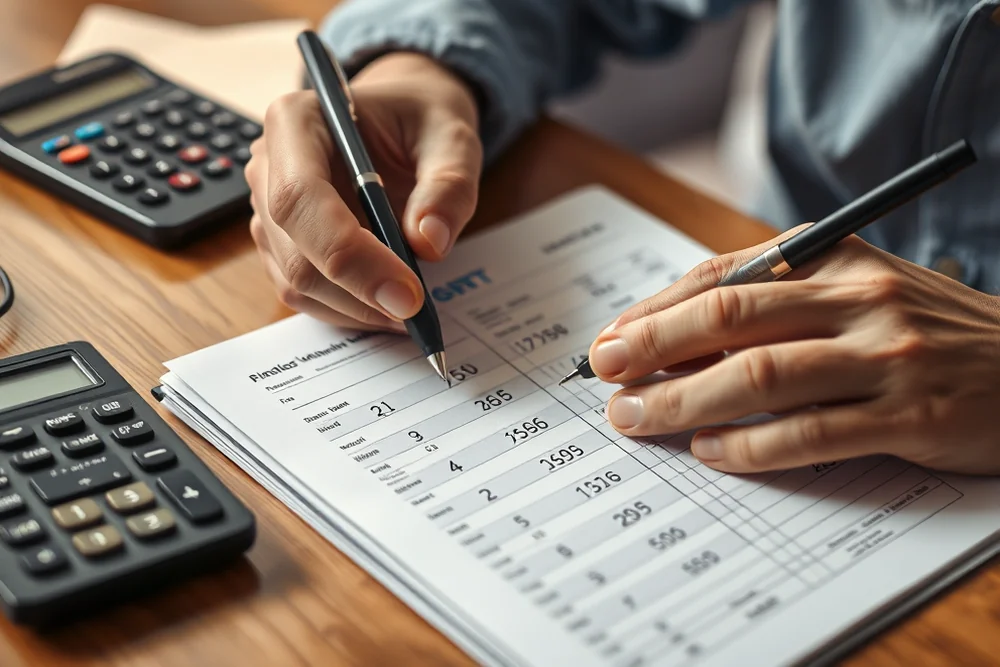
I open my banking app, filter the last 90 days by category, and write down three numbers per category: lowest month, highest month, average. The average plus a 10% buffer is what actually goes in the envelope — the buffer is what keeps a $4 price hike on eggs from blowing the whole system in week two.
For biweekly pay, I split each monthly number in half; for irregular freelance income, I built a simpler rule after that 23-day-late invoice month — I fund envelopes at 70% of the target the moment any payment lands, then top up to 100% when the next one clears. It's saved me from a bounced-envelope panic at least four times.
My actual numbers, for reference: groceries $420/month ($210 per paycheck), gas $160/month ($80), dining out $200/month ($100), fun money $100/month ($50), household $120/month ($60) — that's $890 a month across five envelopes, and I withdraw it in one ATM trip to avoid fees.
The envelope doesn't judge you at 9pm on a Tuesday. Your bank balance definitely does.
Related: Cheap cash envelope budgeting
Related: Fast cash envelope budget binder
Related: Best budget planner with cash envelopes
Related: Easy Cash Envelope Budgeting Mistakes
Related: Best cash envelope budget system
Related: Envelope Format For Mailing
Choosing Envelopes That Survive More Than One Payday
My first system used plain white #10 envelopes from a box of 100, and by day 19 the flap on my grocery one had torn clean off from being opened and folded roughly 40 times. I switched to a $9 set of six waterproof vinyl envelopes with a plastic snap closure, and those same six have survived four years, two purses, and one accidental wash-cycle trip.
If you want zero-purchase setup, a plain accordion coupon organizer from a dollar store works fine for the first month — I recommend this to readers who aren't sure the system will stick before spending anything. Label each slot with painter's tape and a Sharpie; it peels off clean if you reorganize later.
Whatever you choose, write the starting balance and the date on the outside of each envelope every payday. I do quick subtraction on the flap after every purchase — it takes four seconds and it's the single habit that makes the system actually work instead of becoming a pile of unlabeled cash.
Look for envelopes rated for at least 500 open-close cycles if you're buying reusable ones — cheaper vinyl sets fray at the zipper seam around month five. Mine have a snap closure instead of a zipper and it's held up noticeably better.
“The first time I tried cash envelope budgeting I did it wrong for three straight weeks — I stuffed twenties into a random kitchen drawer…”— EnvelopeCash editors
The Payday Ritual: My Exact 11-Minute Routine
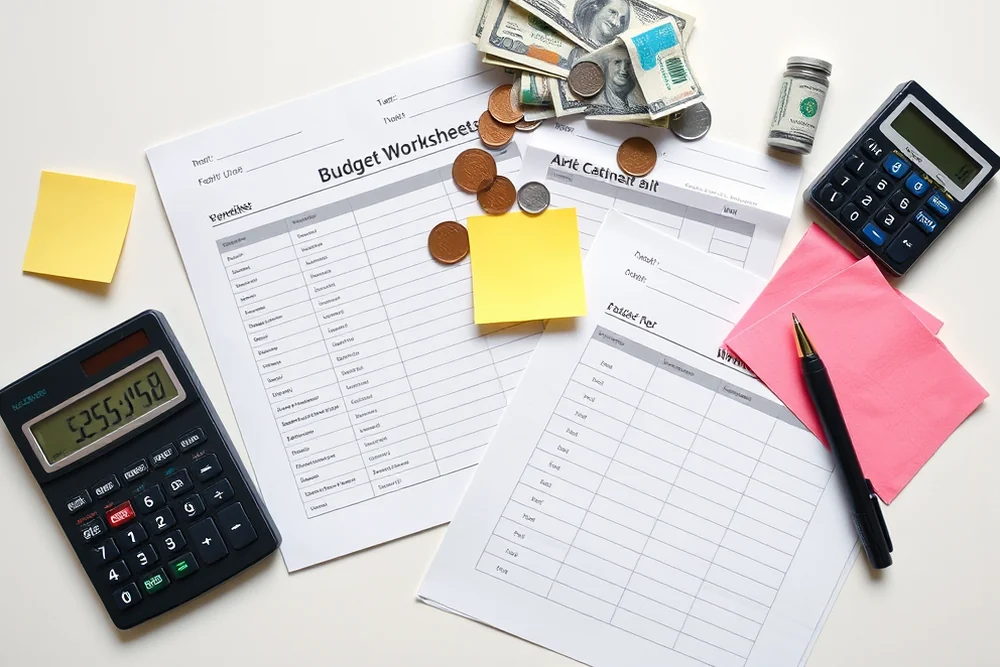
I do this every other Friday at 6pm, same chair at my kitchen table, same order every time: rent and bills move electronically first, then I withdraw the envelope total — usually $445 for a biweekly cycle — in one ATM trip using $20s and a few $10s and $5s for smaller categories.
Sorting itself takes about 11 minutes once you've done it three or four times. I count each stack out loud, which sounds silly but it's caught two counting errors in four years that silent counting missed. Each envelope gets its new balance written on the flap before it goes back in the drawer.
The habit that made this stick wasn't the counting, it was picking a fixed time and place. The two months I tried to 'do it whenever' I skipped sorting entirely and just carried loose cash, and both those months I overspent by more than $60 compared to my sorted-envelope months.
What Happens When an Envelope Runs Dry
The whole point of the system breaks the moment you let yourself 'just this once' pull from your bank card when an envelope runs dry — I did that twice in my first two months and both times it took me a full cycle to feel the discipline come back.
My actual fallback rule: I'm allowed to borrow from the fun money envelope into any other category, never the reverse, and I write the amount borrowed on a sticky note inside both envelopes so next payday's math accounts for it automatically.
Running dry early is data, not failure — my dining-out envelope hit zero by day 19 for two cycles straight before I raised its funding from $80 to $100 per paycheck. Now it lasts the full two weeks with about $6 left over, which tells me the number is finally right.
⭐ Classic
Five envelopes — groceries, gas, dining, fun money, household — funded at your 90-day average plus 10%. This is the setup I still use four years in.
💰 Budget
Start with just two envelopes (groceries and dining out) using free dollar-store coupon organizers instead of buying anything — $0 to start, upgrade envelopes once the habit sticks.
⚡ Extra-Fast
Skip individual withdrawals — get your whole paycheck in cash once, sort at the table in one sitting, and put fixed-bill cash straight into a sealed 'bills' envelope for a same-day bank deposit.
✨ Depth
Add sub-envelopes inside your main ones — 'meat,' 'produce,' and 'household' folders inside the grocery envelope — for readers who want granular tracking without extra categories.
🥗 Light
One single 'flex spending' envelope covering everything except bills, for people who find five categories overwhelming and just want a hard ceiling on discretionary cash.
| The mistake | Why it happens | The fix |
|---|---|---|
| Enveloping every single spending category on day one | Sorting twelve envelopes takes 40+ minutes and feels like a chore fast, which is exactly why most people quit by their second paycheck. | Start with your two worst categories only — usually groceries and dining out — and add one new envelope every payday until you're at five or six. |
| Funding envelopes based on a guess instead of real spending data | Guessed numbers are almost always too low, so every envelope runs dry by week one and the whole system feels broken within a month. | Pull three months of actual statements, average each category, and add a 10% buffer before you fund a single envelope. |
| Reaching for a debit card the moment an envelope runs empty | This defeats the entire purpose — the hard stop is the mechanism that changes behavior, and one exception makes the next exception easier. | Set one explicit borrowing rule in advance (I only borrow from fun money) and write every borrowed dollar down so next payday's funding accounts for it. |
| Skipping the write-the-balance-on-the-flap step | Without a running balance you're guessing how much is left, which leads to either overspending or hoarding cash out of uncertainty. | Subtract and write the new balance on the envelope immediately after every purchase — it takes four seconds and it's the habit that makes cash envelopes actually work. |
What You'll Need tap to check off
- 5 labeled cash envelopes (vinyl, Tyvek, or coupon organizer slots)
- 1 Sharpie or fine-tip marker
- 1 trip ATM withdrawal covering your full envelope total
- 1 sheet backup notepad or spreadsheet (for the running balance)
- 1 flat table or surface to count on
- 10% buffer built into each category total
Method tap a step when done
- The moment your paycheck clears, pay fixed bills (rent, utilities, subscriptions) electronically first — those never touch cash.
- Add up your five variable categories' per-paycheck amounts and withdraw that exact total in one ATM trip, requesting a mix of $20s, $10s, and $5s.
- Sit at a table, lay out your envelopes in the same order every time, and count each stack out loud as you sort it in.
- Write the new balance and the date on the outside flap of every envelope before closing it.
- Log the same five numbers in your backup notepad or spreadsheet so you have a record if an envelope ever gets lost.
- Store the envelopes in the same spot — a drawer, a zip pouch in your bag — so grabbing the right one becomes automatic within a week.
Key Facts
Easy Cash Envelope Budgeting
Common Questions
Is cash envelope budgeting actually effective compared to a budgeting app?
What if I only get paid once a month, not biweekly?
How do I handle bills that come out of a card, like subscriptions?
What do I do with leftover cash at the end of the cycle?
References
Cite this guide
EnvelopeCash (2026). Easy Cash Envelope Budgeting. https://envelopecash.com/easy-cash-envelope-budgeting/
Feel free to cite or share this guide.