
Cash Envelope Budget System
📖 Table of Contents
- What Is the Cash Envelope System, Exactly
- How the Cash Envelope System Actually Works, Step by Step
- Choosing Your Envelope Categories (And What I Actually Use)
- Cash Wallets, Zipper Pouches, and Envelope System Alternatives
- Common Categories, Real Numbers, and What to Budget Per Envelope
- Make It Your Way
- Frequently Asked Questions
- The Printable Action Plan
I started using a cash envelope budget system eleven years ago, sitting at my kitchen table with $340 in cash, six white envelopes, and a checkbook register I hadn't balanced in four months. My husband and I had just realized we'd spent $612 on takeout in a single month without either of us noticing, and I was done pretending a spreadsheet alone was going to fix that. I labeled the envelopes Groceries, Gas, Restaurants, Fun Money, Kids' Clothes. Household, stuffed the cash inside, and by the third week I had already caught myself putting a $14 drive-thru order back because the Restaurants envelope had exactly $9 left in it. For the full picture, see our cash envelope budgeting guide — our complete hub on the topic.[1]
That physical moment of counting bills at a register instead of tapping a card changed how my brain processed spending almost immediately. Researchers at Carnegie Mellon and Dun & Bradstreet have both found that people spend roughly 12 to 18 percent more when paying with plastic than with cash. I believe it, because my own restaurant spending dropped from $612 a month to $290 in the first 60 days of running a cash envelope budget system. The pain of physically handing over a $20 bill registers in a way that a card tap never will.[2]
This guide is everything I've learned running this system for over a decade, including the exact categories I use, the math behind how much to put in each envelope, the zippered wallet that finally stopped my cash from getting crushed in my purse. How to adapt the whole method if you genuinely can't or won't carry cash. I'll walk through real numbers, real mistakes I made in year one. The tweaks that took this from a gimmick to the backbone of how my family manages roughly $5,200 a month in take-home pay.[3]
Why You'll Love This Cash Envelope Budget System
- Cuts impulse and card-swipe overspending by 12–18% just by switching to physical cash, based on both my own tracking and published behavioral spending research
- Takes about 20 minutes every payday to set up and requires zero apps, subscriptions, or bank fees
- Gives you a built-in hard stop — when the envelope is empty, spending in that category stops, no overdraft, no guessing
- Works for couples and roommates because everyone can see, touch, and agree on what's left without opening an app or asking for a password
What Is the Cash Envelope System, Exactly
As of August 2026, the core idea is older than modern banking itself — my grandmother did a version of this with a cigar box and rubber bands in the 1960s — but it got a modern name and structure through Dave Ramsey's cash envelope budget system. Popularized labeled paper envelopes as part of a zero-based budget. The mechanics are simple: every dollar of your income gets assigned to a category before the month starts, and cash categories get physical envelopes.
What makes it different from just 'being careful' is the hard boundary. I can't accidentally overspend on groceries by $80 because there's no invisible credit line — there's a $340 stack of bills, and when it's gone, I'm cooking from the pantry until next payday. That happened to me in March of last year, and it forced me to use up freezer meat I'd been ignoring for three months.[4]
It works because it converts an abstract number on a screen into something you can hold, count, and watch shrink. A 2019 study published in the Journal of Consumer Research found that cash payments feel more like a real loss than card payments do. Is exactly the psychological friction that makes people spend less — and it's the entire engine behind why this method outperforms most banking apps for impulse control.[5]
I never let an envelope go to zero without writing the date on the front flap. Six months of dates showing 'empty by the 22nd' told me my Groceries category was underfunded by about $60 — data I never would have caught with a banking app.
How the Cash Envelope System Actually Works, Step by Step
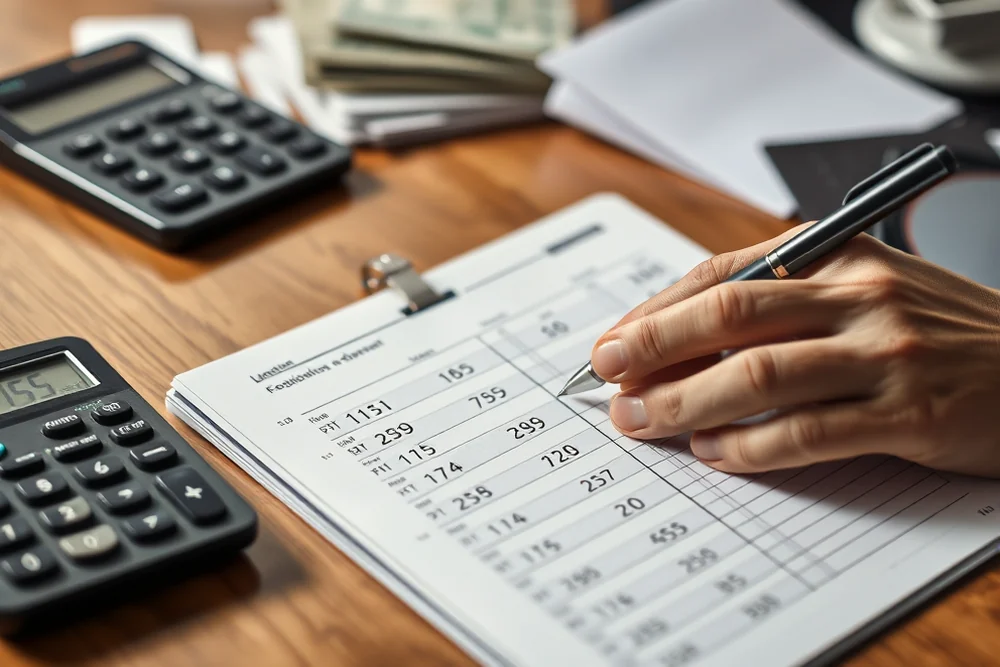
On payday, I sit down with my bank app open and my printed budget sheet. I subtract fixed bills that get paid electronically (rent, utilities, my $54 phone bill) first, because those never touch cash. What's left — usually about $1,100 of my $2,600 twice-monthly paycheck — gets earmarked for the envelope categories.
Then I go to the bank and request specific denominations: I ask for a stack of $20s for Groceries, a roll of $10s for Gas. $5s and $1s for Fun Money and coffee runs, because smaller bills make it easier to make partial purchases without breaking a $20 every time. This one habit alone saved me from the classic mistake of a $20 bill disappearing into a $6 latte with no correct change tracked anywhere.
Every time I spend, the cash physically leaves the envelope, and I write the remaining balance on the front flap after each purchase — a habit that takes maybe eight seconds. When an envelope hits zero, I either stop spending in that category, or I do an intentional transfer from a category with surplus, like pulling $30 from Clothing into Groceries. I write that transfer down too so I'm not fooling myself about where the money actually went.
The envelope doesn't lie to you the way a checking account balance sometimes does — what's inside is what you actually have left, full stop.
Related: Homemade cash envelope budgeting tips
Related: Cash envelope budgeting printable
Related: Homemade budget planner with cash envelopes
Related: Cash envelope budget system tips
Related: Easy cash envelope budgeting ideas
Related: Envelope Format For Mailing
Related: Check Into Cash
Choosing Your Envelope Categories (And What I Actually Use)
The mistake I see most often is people trying to put 15 categories into envelopes, including things like 'Mortgage' or 'Car Insurance.' Don't. Envelopes work best for variable spending you're tempted to overspend on day to day — fixed, unavoidable bills don't benefit from the cash friction because you can't really choose to spend less on rent mid-month.
My current seven envelopes, after eleven years of adjusting, are: Groceries ($380/month), Gas ($160), Restaurants ($150), Fun Money — split evenly between my husband and me ($100 each), Kids' Activities ($90), Personal Care ($60). A Miscellaneous catch-all ($80) for the stuff that doesn't fit anywhere else, like a last-minute birthday gift or a $12 school fundraiser.
If you're a two-income household, consider giving each person their own Fun Money envelope rather than sharing one — my sister and her husband fought constantly over a shared entertainment envelope until they split it into 'His' and 'Hers,' and their arguments about spending dropped to almost zero within a month because neither of them felt like they were asking permission.
Don't convert your whole budget to cash in month one. I recommend starting with just your two or three most-overspent categories — for most people that's Groceries and Dining Out — and adding envelopes gradually once the habit sticks.
“I started using a cash envelope budget system eleven years ago, sitting at my kitchen table with $340 in cash, six white envelopes, and a…”— EnvelopeCash editors
Cash Wallets, Zipper Pouches, and Envelope System Alternatives
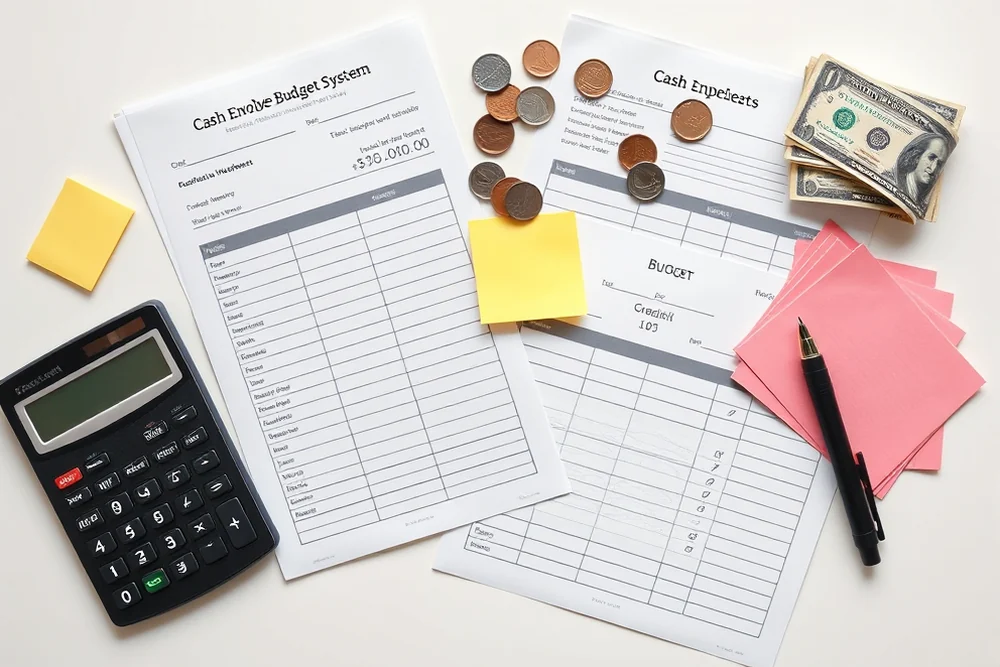
I used plain paper envelopes for my first two years and went through probably 40 of them — they rip at the fold, get soggy if a water bottle leaks in your bag. Don't zip shut, so bills fall out. I switched to a zipper cash envelope wallet, specifically a 12-slot binder-style version with a snap closure, and it completely solved the durability problem; the same wallet has lasted me six years now.
When you're shopping for one, look for genuine vinyl or leather stitching (not glued seams, which split within months), a snap or zipper closure on the outer cover, and slots sized for U.S. Bills without folding them in thirds. I paid $16 for mine and consider it one of the best budgeting purchases I've made, right behind the $4 pack of colored labels I use to mark each slot.
If cash genuinely isn't realistic for you — some jobs pay only by direct deposit with no easy ATM access, or you travel constantly — an envelope budget system without cash works almost as well using apps like Goodbudget, EveryDollar, or a series of separate sub-savings accounts at an online bank like Ally, each acting as a 'digital envelope' with its own balance you can check before every purchase.
Common Categories, Real Numbers, and What to Budget Per Envelope
To figure out your own starting numbers, pull your last three months of bank and card statements and total what you actually spent in each category — not what you wish you spent. When I did this the first time, I discovered we were spending $190 a month on gas station snacks and drinks that weren't even gas. Is money that had been hiding inside our 'Gas' line the whole time.
For a single person, I'd suggest starting around $250–$350 for Groceries, $80–$150 for Gas, and $80–$120 for Dining/Entertainment combined. For a family of four, groceries alone commonly run $500–$800 depending on region — USDA's 2024 moderate-cost food plan estimated about $1,050 a month for a family of four, though most cash-envelope households I've talked to budget tighter than that federal average by meal planning and shopping sales.
Round your envelope amounts to numbers that divide evenly by your available bill denominations — I budget Groceries at $380 instead of $365 specifically because it splits cleanly into $20s with a $20 left for rounding. Sounds small but saves real friction every single payday.
✉️ Classic Paper
Plain labeled envelopes from the office supply store — costs under $2 for a pack of 20 and works perfectly if you're just testing the method for a month or two.
💰 Budget Wallet
A $12–$18 zipper cash envelope wallet with 6–12 slots replaces paper entirely and survives years of daily use in a purse or glove box.
👫 Split-Income Couples
Each partner gets a personal Fun Money envelope while shared categories like Groceries stay joint — cuts spending disagreements dramatically in two-income households.
📱 Digital-Only
For anyone who can't carry cash, apps like Goodbudget or separate sub-savings accounts recreate the same hard-limit categories without physical bills.
🏦 Hybrid Sinking Fund
Combine a few physical envelopes for daily spending with a digital sinking fund account for irregular costs like car repairs or holiday gifts.
| The mistake | Why it happens | The fix |
|---|---|---|
| Putting every single spending category into an envelope, including fixed bills like rent or car insurance. | Fixed bills don't benefit from cash friction because you can't meaningfully choose to spend less on them mid-month, and it makes the system feel overwhelming and impossible to maintain. | Keep fixed, unavoidable bills on autopay through your bank, and reserve envelopes only for variable categories you're actually tempted to overspend in, like groceries and dining out. |
| Withdrawing cash in only large bills, like all $50s or $100s. | You end up breaking a large bill for a small purchase, and the change either doesn't make it back into the right envelope or gets absorbed into a different category by accident. | Request specific denominations from the bank teller — $20s for groceries, $10s and $5s for gas and fun money — so you can make exact or close-to-exact purchases without constant change chaos. |
| Not writing down the balance after every purchase and trying to estimate what's left by eyeballing the stack. | I did this for my first three months and consistently overestimated my Restaurants envelope by $20–$30, which defeats the entire purpose of the hard-limit system. | Write the new balance on the envelope flap immediately after every purchase — it takes about eight seconds and removes all guesswork. |
| Setting envelope amounts based on what you wish you'd spend rather than your real historical average. | Underfunding a category — like budgeting $200 for groceries when you actually spend $380 — sets you up to fail in the first two weeks and makes the whole system feel broken. | Pull three months of actual statements before setting your first envelope amounts, and round up slightly rather than down until you've built a track record. |
What You'll Need tap to check off
- 6 labeled envelopes or a zipper cash envelope wallet with slots
- 1 printed monthly budget sheet or index card with category totals
- 1 pen for tracking balances on each envelope flap
- 1 trip bank or ATM visit for cash withdrawal
- requested bill denominations: $20s, $10s, $5s, and $1s
- 1 receipt or notes app entry for any envelope-to-envelope transfers
Method tap a step when done
- List every variable spending category you tend to overspend in — for most people this is Groceries, Gas, Dining Out, and Fun Money — and skip fixed bills that are already on autopay.
- Pull your last 3 months of statements and average your real spending in each category to set a realistic envelope amount, rounding to numbers that split evenly into $20, $10, and $5 bills.
- On payday, withdraw the total cash amount at your bank rather than an ATM, and specifically request the denominations you'll need — this avoids the classic problem of only having $50s for a $12 Fun Money purchase.
- Label each envelope or wallet slot clearly with the category name and the starting monthly amount written in the corner.
- Divide the cash into each envelope immediately, and write the starting balance and the date on the front flap before you leave the bank.
- After every purchase, subtract the amount spent and write the new balance on the flap — when an envelope hits zero, stop spending in that category or make a deliberate, written transfer from a category with surplus.
Key Facts
Cash Envelope Budget System
Common Questions
how to use cash envelope budget system?
cash envelope budget system?
what is the cash envelope system?
what categories for cash envelope system?
how does the cash envelope system work?
References
- PDF AAM 50. CASH - Alaska (doa.alaska.gov)
- Mvelopes : The Digital Version of the Envelope Budgeting System (financialsuccess.iastate.edu)
- PDF NAVSUP Publication 727 EagleCash Financial System (fiscal.treasury.gov)
- Free Printable Cash Envelope Tracker - Printable Study Planner (fwd.iws.edu)
- Envelope System - Allen Yarnell Center for Student Success | Montana ... (montana.edu)
Cite this guide
EnvelopeCash (2026). Cash Envelope Budget System. https://envelopecash.com/cash-envelope-budget-system/
Feel free to cite or share this guide.